


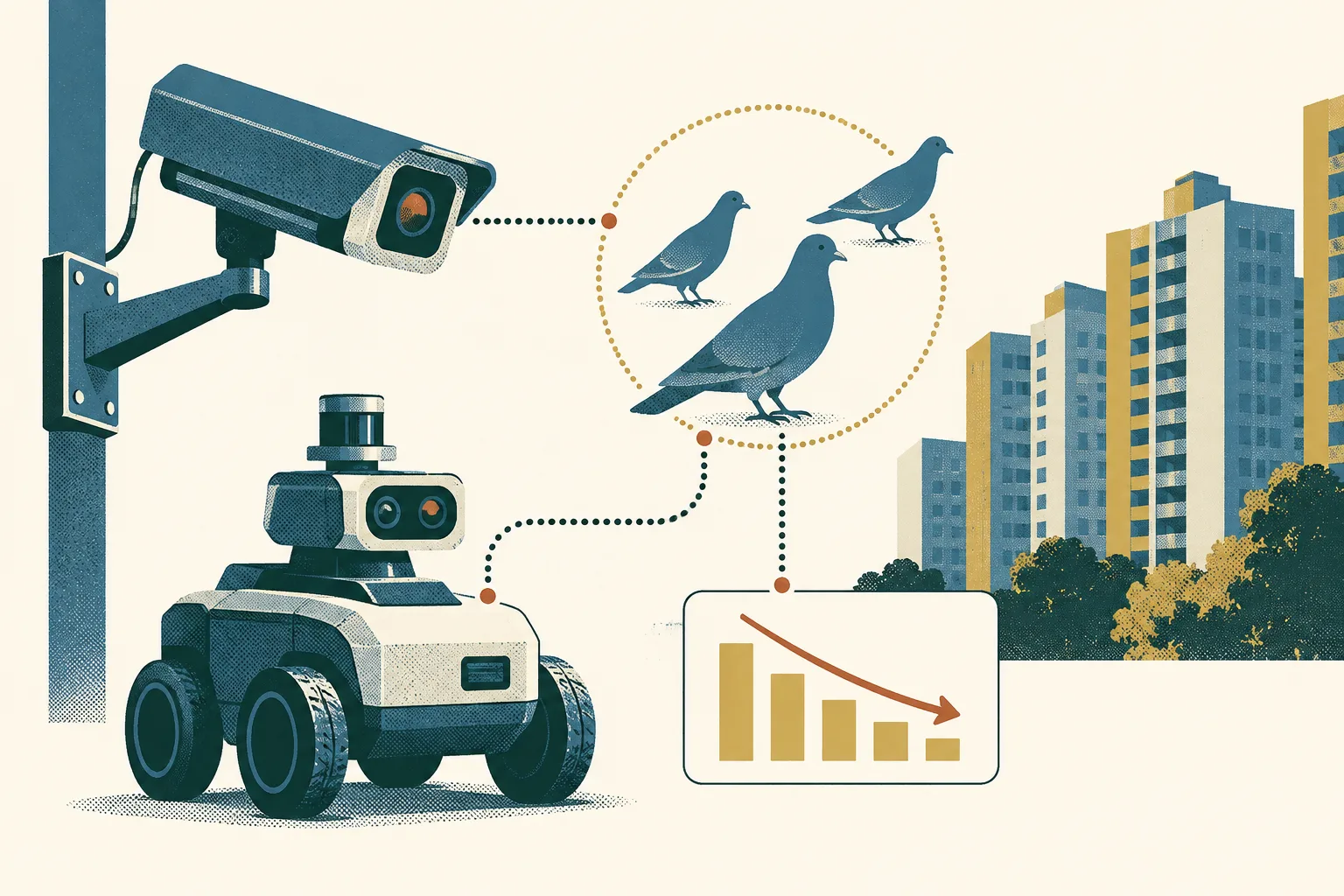
Hong Kong’s Agriculture, Fisheries and Conservation Department is using AI cameras and patrol robots to identify suspected illegal pigeon feeding and help plan enforcement. The cameras are installed at five private housing estates, and the department began testing them in September 2025.
The cameras detect gatherings of pigeons and suspected feeding, then send information to the department. A weekly report helps staff estimate when suspected feeders visit and what they look like, so officers can plan enforcement. At a trial near Hang Hau Station, information gathered by the system helped an operation issue fixed-penalty notices to two people in the fourth quarter of 2025.
The department introduced its patrol robot in the second quarter of 2026 and is testing it at two private estates. It can play educational videos, warn people suspected of feeding pigeons and record suspected incidents to send to the department. The robot does not use facial recognition and automatically pixelates faces in footage of suspected feeding. The camera system also has no facial recognition; its footage is generally retained for 30 days, while footage unrelated to feeding is deleted within that period.
The estates using the robot must charge it: a two-hour charge provides six hours of operation. The department currently pays a rental fee of HK$20,000 a month per unit, according to a senior veterinary officer.
The feeding ban was extended to wild pigeons on 1 August 2024. Department figures put the wild pigeon count at about 13,500 in the fourth quarter of 2024 and about 10,600 in the first quarter of 2026, a fall of more than 20%. By October 2026, government departments had issued 459 fixed-penalty notices since the prohibition took effect.
The department’s chief veterinarian said eliminating pigeons was unrealistic: they can forage on seeds from trees, while feeding by people encourages them to gather in the city.