


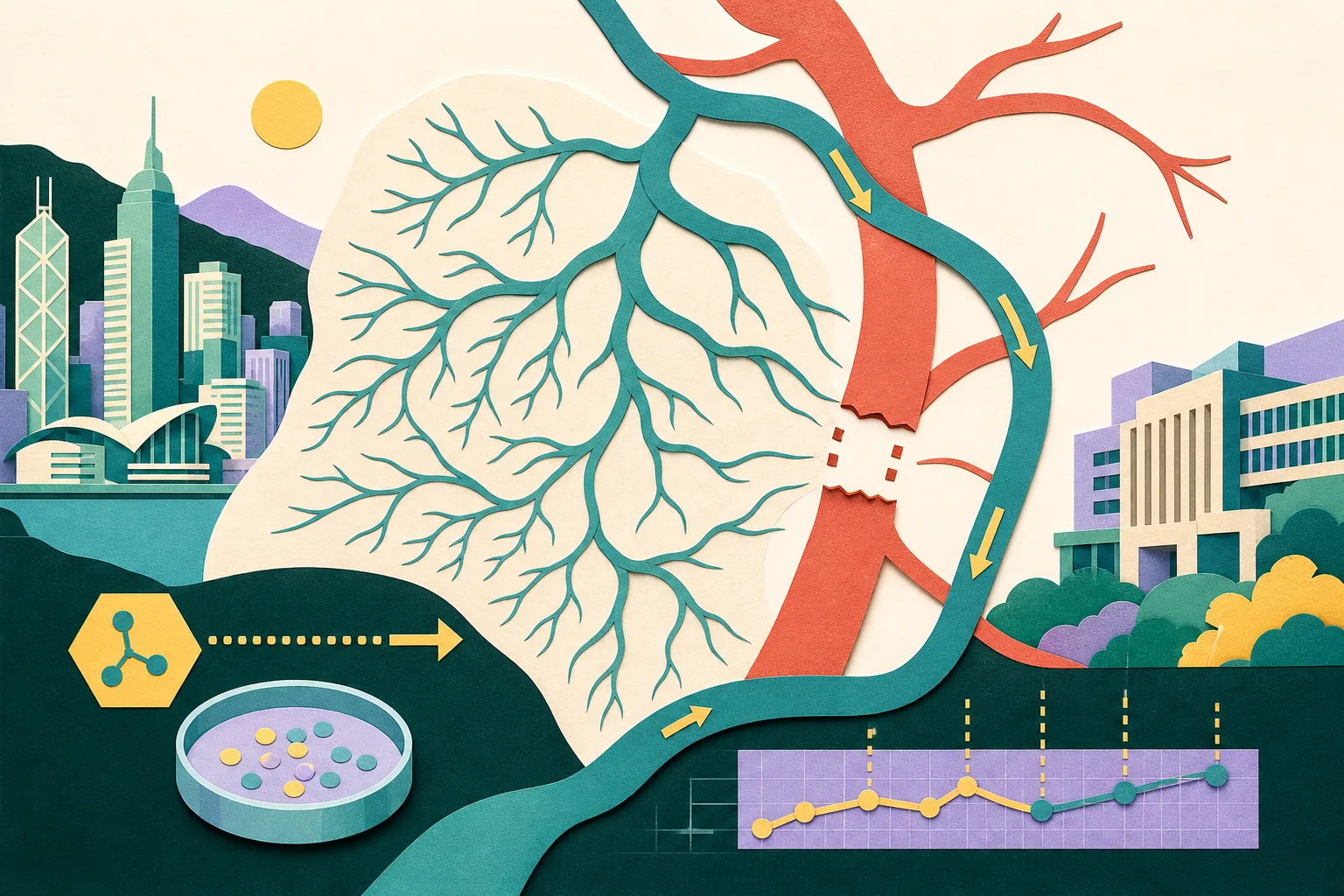
Researchers from the Faculty of Medicine at The Chinese University of Hong Kong and the Chinese Academy of Sciences announced the findings at Prince of Wales Hospital on August 24, 2026. The study examined how some people develop collateral arteries that bypass a blocked coronary artery and supply blood to oxygen-deprived heart muscle, although not all patients can form them.
The team said these collateral arteries are formed mainly when capillaries transform into larger blood vessels. i-CABLE reported that the researchers used genetic lineage-tracing to investigate the vessels’ origins, while Star Headline described the work more broadly as a self-developed cell-tracking technique.
In animal experiments, the researchers used vascular endothelial growth factor A, or VEGFA, to promote collateral artery formation. i-CABLE reported that VEGFA-modified RNA increased blood vessels in mice and was associated with fewer heart attacks and improved heart function. Those findings came from animals and do not establish that the treatment is effective or safe for people.
The researchers said VEGFA could be a treatment target for promoting collateral artery growth, but they are still exploring other methods and assessing whether the VEGFA approach is the most effective and practical option, i-CABLE reported.
Reported treatments for coronary heart disease currently include coronary stent placement and open-chest bypass surgery. The study focuses on a potential way to encourage the heart to develop an alternative blood supply.
The findings remain at the research stage and are not ready for clinical treatment. More large-animal studies and trials relevant to clinical use are needed, according to both reports. The team also cited funding difficulties and said it hoped to continue research in the Greater Bay Area, i-CABLE reported.