


Hong Kong’s Fire Services Department is extending its Internet of Things Fire Detection System to older buildings of seven storeys or more, with about 6,000 buildings expected to be covered. It is an alternative for eligible buildings facing fire-safety upgrade requirements, not a blanket replacement for conventional systems.
The estimate includes composite-use buildings covered by the Fire Safety (Buildings) Ordinance that were completed, or first submitted for approval, by 1 March 1987. It also includes purely residential buildings of more than three storeys meeting the same date test. The system detects a fire and sends a signal via a service-provider platform and dedicated line to the fire services communications centre in about 10 seconds.
The department’s estimates, reported by i-CABLE, put the work at two to four weeks and HK$500,000 to HK$2.2 million. The conventional option is estimated to take one to two years and cost HK$1.3 million to HK$2.6 million. The department began a pilot early this year in 10 older buildings of six storeys or fewer.
Requirements depend on a building’s height. For blocks of seven to 12 storeys, the alternative includes the connected detection system and two 5kg dry-powder extinguishers on every floor, as well as dry fire hoses. Where hoses already exist, they must pass a functional test; where they do not, hoses must be installed in all staircases. The existing manual fire-alarm system is removed. In buildings of 13 storeys or more, sensors are fitted to existing fire pumps and water tanks, and the manual alarm system is also removed.
Before choosing the system, owners may need to test whether signals can travel reliably through their building. They must also reach agreement on the conventional or connected option, a service provider and the payment plan, the department’s acting deputy chief fire officer responsible for building improvement told Ming Pao.
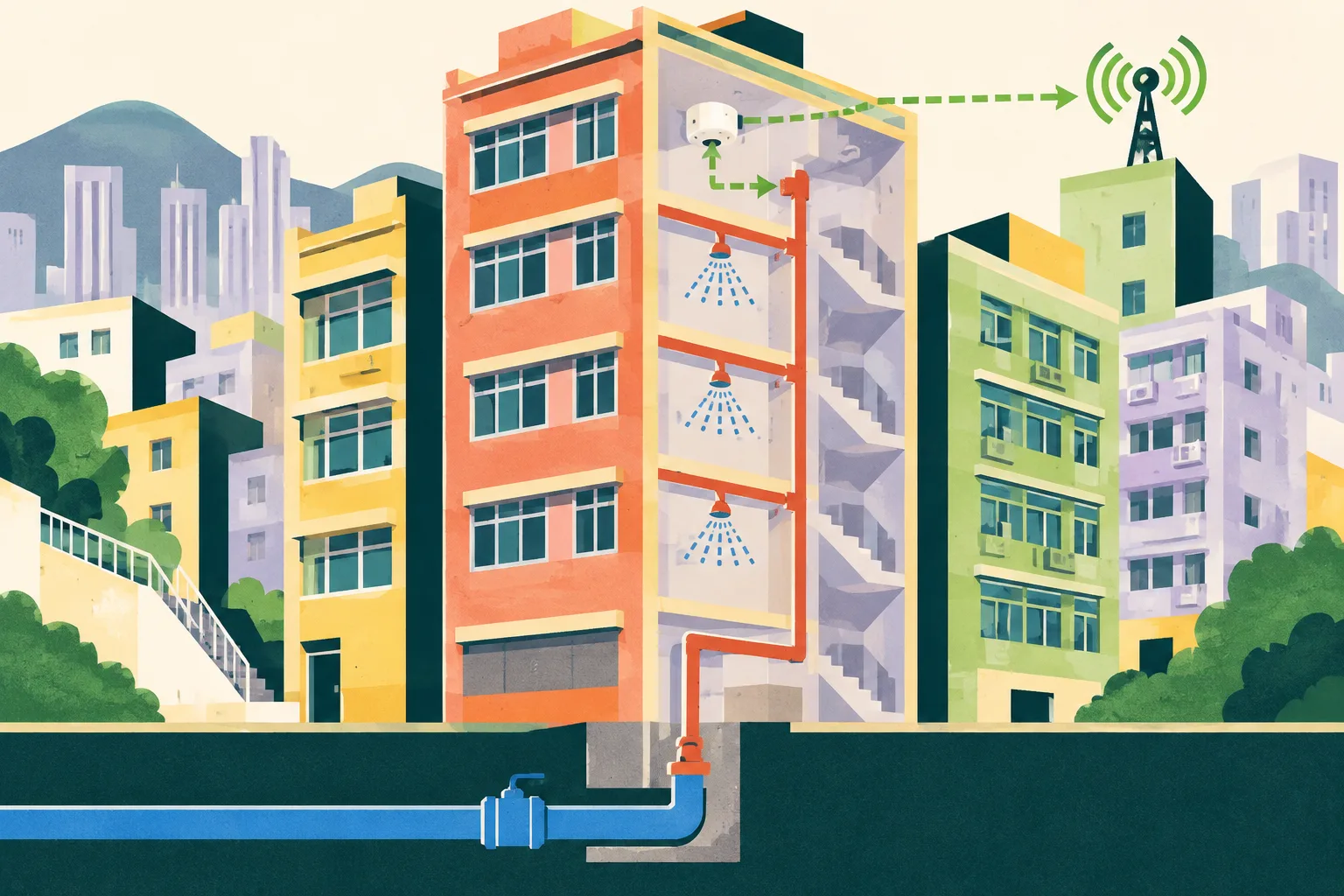
A separate alternative sprinkler design is intended for buildings where a large rooftop sprinkler tank is difficult to accommodate. It connects government water mains to the building’s sprinkler system through a backflow-prevention device and pressure-boosting equipment, avoiding the need for the tank. The department expects the option to cover about 900 buildings.
The department estimates sprinkler work could take three to five years, compared with six to eight years for the conventional arrangement. i-CABLE reported estimated costs of about HK$1.5 million for the alternative, against HK$3 million to HK$6 million for the conventional system.
The acting deputy chief fire officer said the department would coordinate with the Water Supplies Department over possible interruptions. If it received notice of a disruption, it would alert frontline staff and, if needed, send additional fire engines and personnel to affected buildings.