


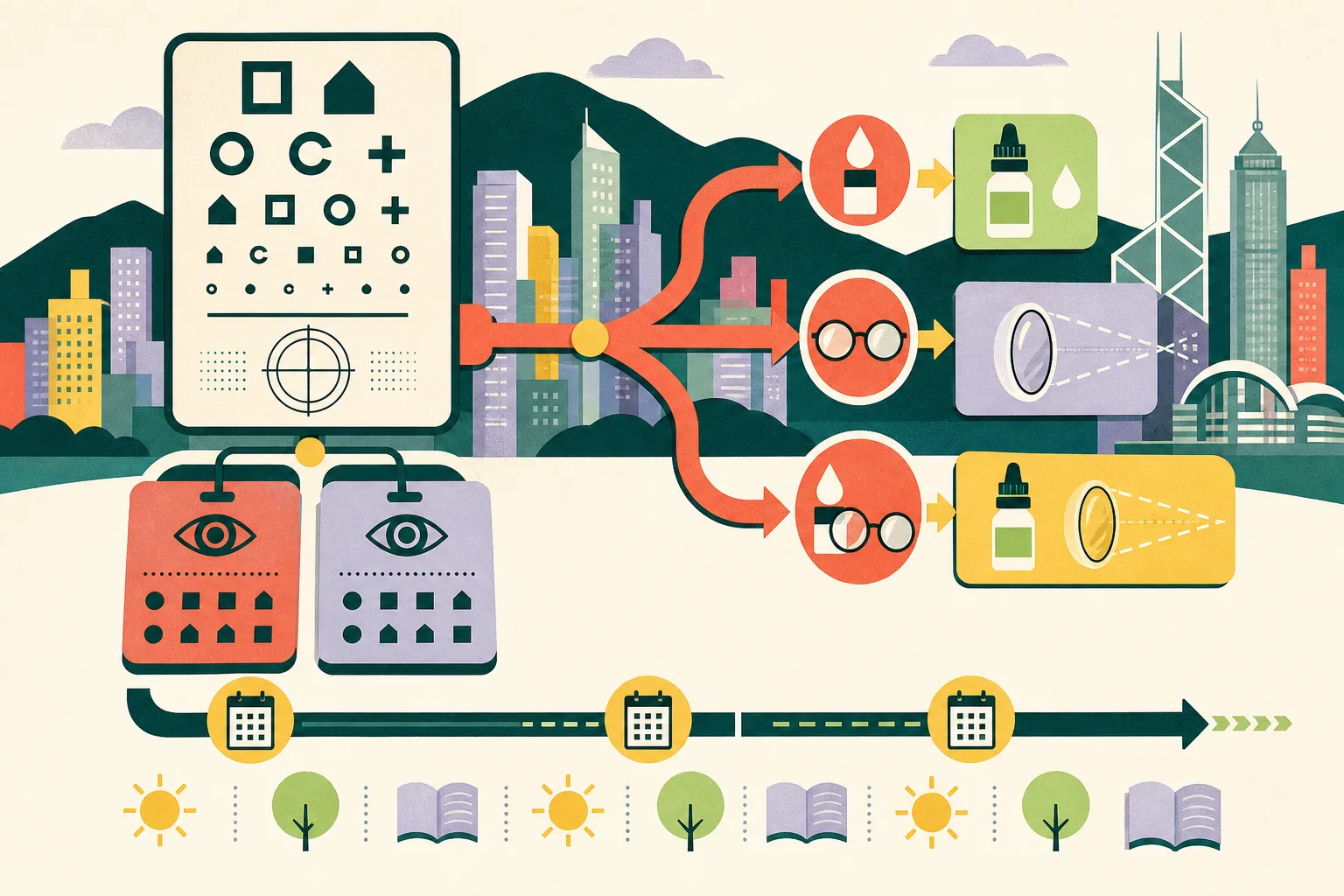
Orbis International and the University of Hong Kong’s Faculty of Medicine are collaborating on a programme offering free eye examinations to 1,000 children aged five to 12 and screenings to 1,000 adults aged 50 or older. The initiative will also support a planned three-year clinical trial on treatments to control childhood myopia, expected to begin in 2027.
The child examinations are intended to identify myopia early and provide professional advice. Child-screening registration was reported to be open on 8 September 2026, with the screenings expected to begin in October. Details of the adult screenings were to be announced later, and the reports do not specify their venues or registration arrangements.
The programme comes amid concerns about myopia among both children and older adults. RTHK reported that a 2025 HKUMed study of 501 children aged five to 12 found a myopia rate of 39.7%. An analysis of 4,217 adults aged 50 or older found that 44.5% had myopia and 6.7% had high myopia.
The planned Children Myopia Control Study will run for three years and compare low-concentration atropine eye drops, optical defocus spectacle lenses, and a combination of the two approaches in children aged five to 12. Researchers want to determine whether combining the treatments is more effective when myopia continues to progress despite one treatment alone.
An HKUMed ophthalmologist said atropine may slow the progression of myopia, but can cause light sensitivity and blurred near vision in some children, according to i-CABLE News. The report described defocus lenses as non-invasive, but said they require full-time wear and may lose effectiveness if they are bent.
The reports said glasses can correct blurred distance vision, but do not reverse elongation of the eyeball or remove the longer-term risks associated with high myopia, including eye disease and permanent sight loss.
The screenings are being arranged, while details of the adult programme remain pending and the clinical trial is still planned rather than under way. RTHK said parents were being encouraged to arrange annual professional eye examinations for children, and to consider outdoor time, breaks from close work and a comfortable reading distance.