


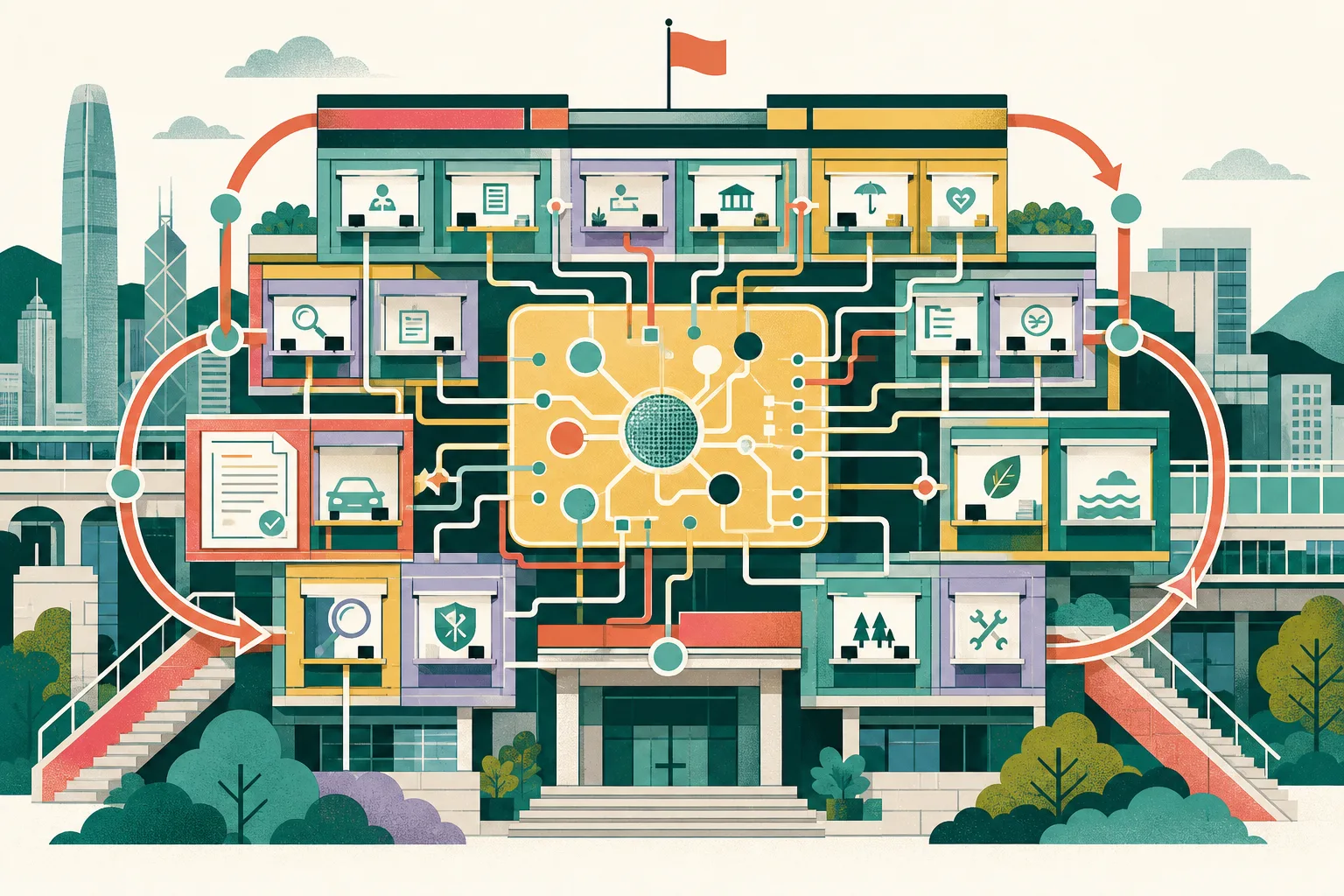
Hong Kong’s use of artificial intelligence is intended to make public services faster and simpler, rather than automatically bring substantial reductions in civil-service staffing, Deputy Chief Secretary for Administration Cheuk Wing-hing said. He said AI could save time and streamline procedures, but its adoption did not necessarily mean the government could significantly reduce its workforce.
An AI efficiency team led by Cheuk has announced or implemented 30 projects involving 13 government departments. Cheuk said the projects focused on improving efficiency and services of public concern, rather than adopting AI for its own sake, while also helping develop an internal culture of using AI.
Departments will remain responsible for monitoring AI-assisted operations after the systems are introduced, Cheuk said. They should not withdraw from oversight or treat AI as responsible for errors in government services.
He said staff would continue to supervise an AI-assisted licence-renewal service, as well as AI applications used for inspections or environmental protection. The examples were given to illustrate that deploying AI would not remove departmental oversight.
The reports supplied give different accounts of how far the 30 projects have progressed. One report said 17 projects had been launched in 2026 and that the remainder would be launched in the second half of the year.
Another report said five projects had been launched in the first half of 2026, with 26 expected to be completed by mid-2027 and the remaining four scheduled for the second half of 2027. It described the government’s approach as launching projects when they were mature, rather than following a deliberately fixed phased timetable.
The differing figures leave the authoritative rollout count and completion schedule unclear. The supplied reports also provide no quantified estimates of staffing reductions, redeployment or workload effects from the projects.