


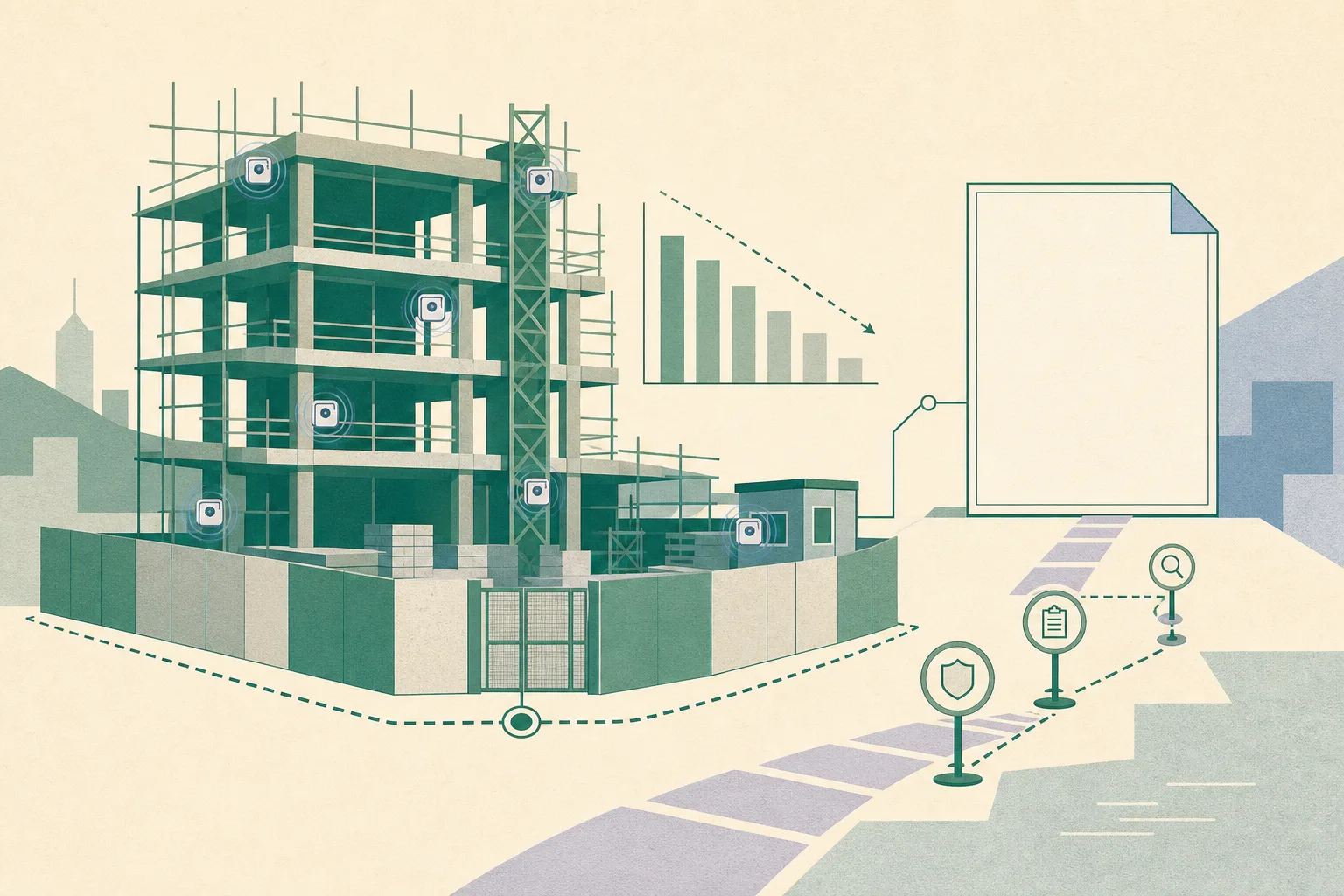
Hong Kong’s overall construction accident rate fell by roughly 20% between 2023 and 2025, the Development Bureau said, while Smart Site Safety System (4S) technology had been installed at about 80% of construction sites. The figures were reported as the government sought wider use of technology alongside stronger responsibility for site safety.
Development Secretary Bernadette Linn said the government wanted 4S to become a standard or baseline provision at all construction sites. RTHK described the initiative as mandating advanced protective systems across public works, but the reports did not establish whether any requirement would immediately apply to every site or how it would be enforced.
RTHK reported that 60% of sites had received the official 4S label. The Development Bureau also updated its technical guidelines in July 2026, adding three categories of 4S devices intended to cover more high-risk processes on public works projects.
The government is reviewing the Buildings Ordinance and aims to submit an amendment bill by the end of 2026, i-CABLE News reported. The proposed changes would strengthen contractors’ and construction professionals’ responsibility for site safety, although the report did not provide details of the provisions or any penalties.
The safety drive comes amid continuing concern over fatal incidents. Construction Industry Council chairman Thomas Ho said 15 fatal accidents had been recorded in 2026 by the time Construction Safety Week opened on August 24, matching the total reported for the whole of 2025.
Ho attributed the deaths to persistent pressure to work quickly, saying many incidents involved non-urgent work that was nevertheless rushed. A Construction Industry Council survey cited by RTHK found that 14% of frontline workers and 6% of foremen did not routinely carry out dynamic risk assessments.
Ho called for stronger supervision on sites and greater management engagement, including the principle that work should not proceed without supervision. Linn said construction safety should combine smart technology with mutual care and accountability, alongside greater investment in worker welfare, mentoring for newcomers and family-centred safety campaigns. The final scope and timetable for any 4S mandate or legal changes remain unclear.