


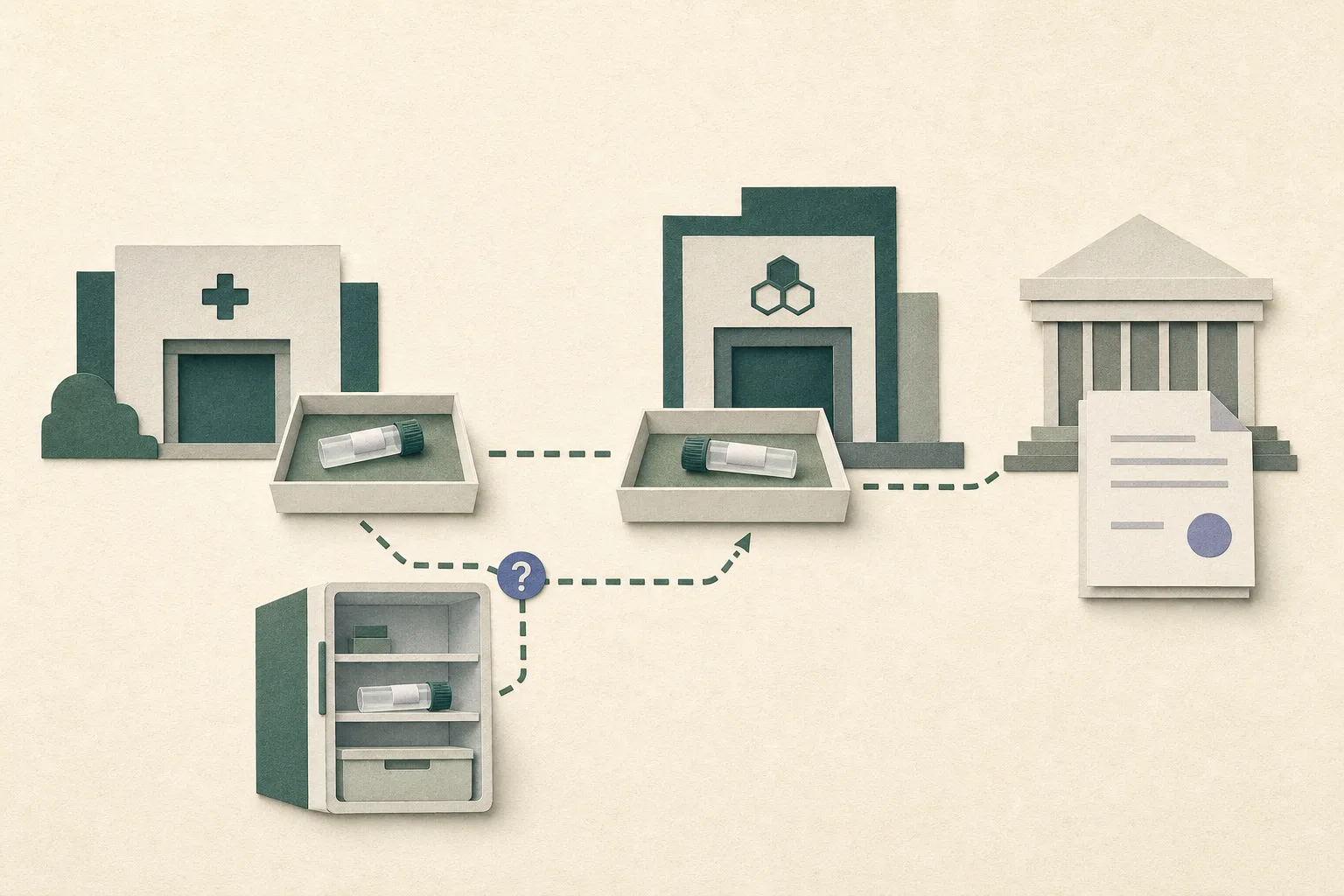
A 25-year-old Hong Kong police officer is on trial over allegations that he kept a woman’s blood sample from a suspected drink-driving case in his home refrigerator instead of sending it to a government laboratory. The case opened in the District Court on 24 August 2026, with prosecutors continuing to pursue charges of misconduct in public office and an alternative charge alleging an act tending and intended to pervert the course of justice.
The defendant, Cheng Long, joined the police force in July 2020 and was assigned as an investigator to the Tai Po district criminal investigation team from 10 March 2024. He denies the offences. The allegations outlined in court have not been established as facts.
Prosecutors said the woman, identified in court as X, was arrested on 29 May 2024 over an alleged common assault and suspected drink-driving case that Cheng took over. With X’s consent, a doctor handed her blood sample to a police officer at the hospital, who then passed it to Cheng to arrange testing, according to the prosecution.
The prosecution said Cheng acknowledged on 30 May that the sample was being kept in his home refrigerator. A supervisor instructed him to send it to the government laboratory, prosecutors said. Police allegedly recovered X’s blood sample from the refrigerator after arresting Cheng on 17 July 2024.
Prosecutors also alleged that Cheng took X to his home on 3 June and used his mobile phone to take six photographs of her, four of which were nude photographs. The reports present these claims as allegations made in the prosecution’s opening submissions.
The prosecution further alleged that Cheng privately contacted X through WhatsApp. It said he sent her an image carrying a threatening message warning that her suspected drink-driving case would be “finished” if she did not contact him. Prosecutors also said he sent X a photograph of the blood sample and set both the photograph and the message to disappear after being viewed.
Reports said Cheng admitted sending the image during a recorded cautioned interview. The prosecution’s account does not by itself establish that the messages or photographs were accepted by the court as evidence.
The charges still being pursued are misconduct in public office and an alternative charge alleging an act tending and intended to pervert the course of justice. Cheng denies the relevant offences. Prosecutors are no longer adducing evidence on charges of blackmail and procuring another person to engage in unlawful sexual activity, but the reports do not set out the precise legal outcome of those two charges.
The trial remains pending, as does any final verdict. The supplied reports do not establish why the blood sample was not sent to the government laboratory or what effect that alleged failure had on the original suspected drink-driving case.