


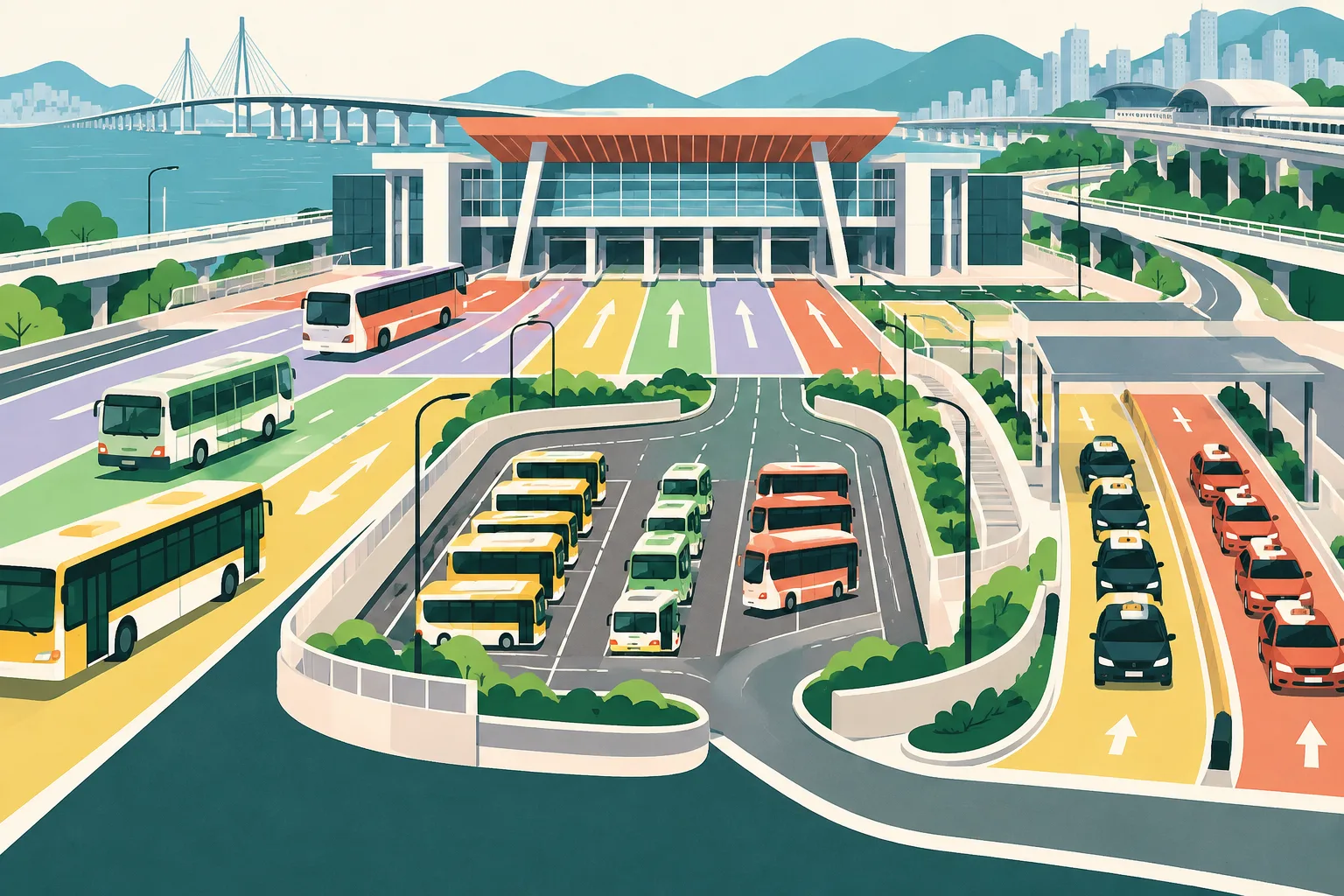
Taxis will be able to drive into New Huanggang Port, but passengers arranging a vehicle to leave the crossing will have only one pre-booked option: a fleet taxi. The port will have pickup areas for ordinary and fleet taxis, but no pickup area is planned for other ride-hailing services or pre-booked taxis.
The wider transport network is planned to include seven franchised bus routes, six minibus routes and five cross-border bus routes serving districts across Hong Kong. The franchised buses will connect nine MTR stations and four bus interchanges, while existing cross-border services to Tsuen Wan, Yau Tsim Mong, Kwun Tong and Wan Chai will remain. Overnight bus and minibus services are also planned.
Urban and New Territories taxis will need to obtain a queue number in a public-transport buffer area before proceeding to collect passengers at the port. The holding area, about two minutes from the crossing, can also be used by buses, cross-border buses, taxis and private cars. Staff will direct vehicles when they can proceed, keeping all of them from entering the port at once.
Dedicated public-transport lanes on Fanling Highway and San Sham Road will give buses and other authorised vehicles a route to the port without passing through San Tin Interchange. The Transport Department says the port will also have clear signs, transport information displays and transport ambassadors during the initial opening period.
For sharp increases in passenger numbers, especially the return peak, operators will hold reserve drivers and vehicles in the buffer area. A reserve bus could reach the port within two minutes, according to the department, while bus companies could add short-distance services to speed up vehicle turnover. The Emergency Transport Coordination Centre will operate around the clock, using port camera systems and traffic monitoring to track passenger and vehicle flows.
The Transport Department advises travellers to choose the land or rail crossing that suits their journey, allow extra time if they use New Huanggang Port and avoid lingering there or at major interchange stations while the arrangements settle.