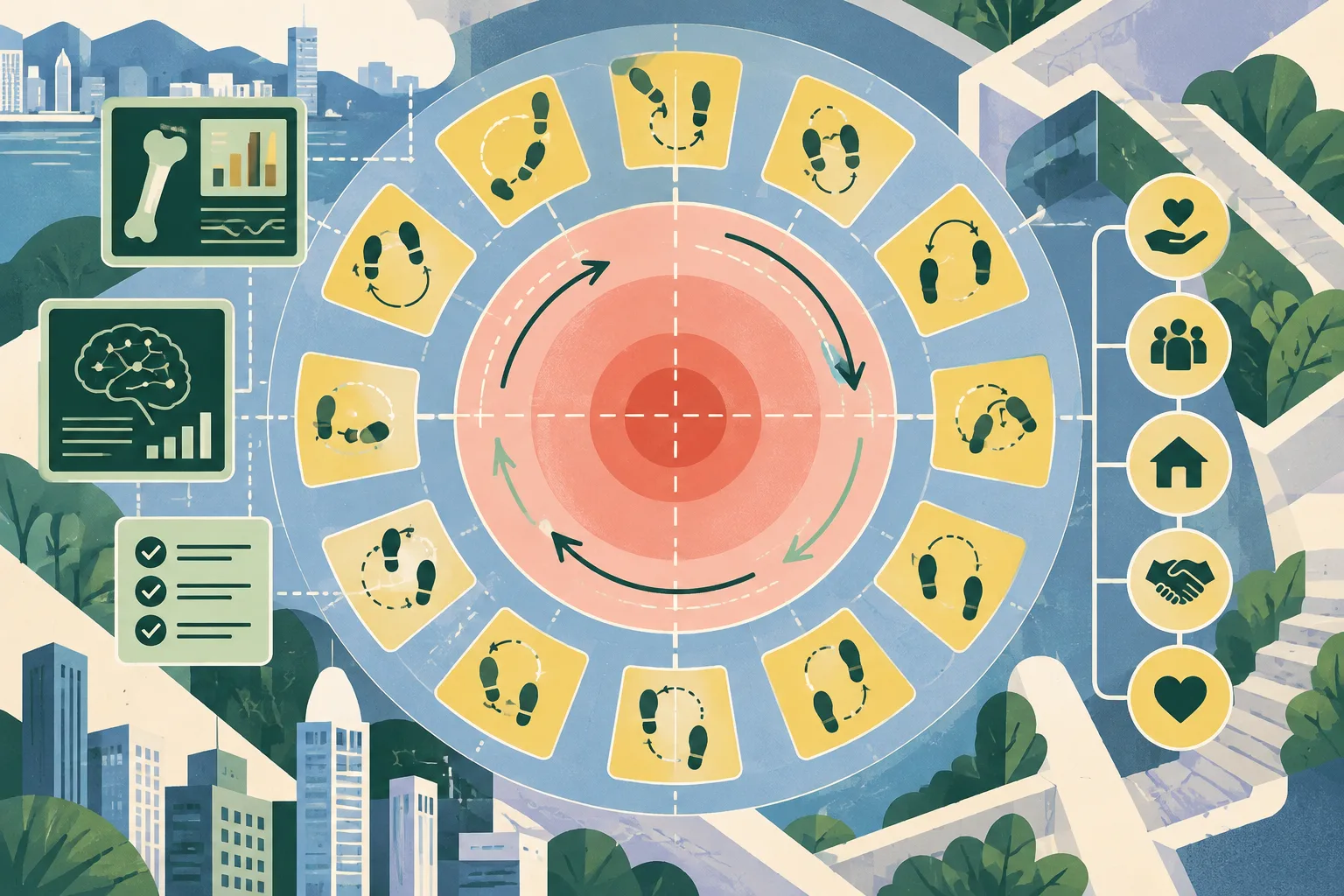
Hong Kong Polytechnic University has launched a programme teaching older people how to protect themselves when they fall, including how to turn their bodies so the impact is spread over a larger area instead of landing heavily on the hip. People assessed as having a moderate to high risk of falling will receive structured training in safe landing and self-protection.
About 17,000 people aged 60 or above are expected to take part over 45 months. The practical training course will last 12 weeks, forming one part of the wider initiative. PolyU is working with five social-welfare organisations, and the programme has received more than HK$119 million from The Hong Kong Jockey Club Charities Trust.
The course combines fall biomechanics with judo-based techniques and is being designed with judo coaches. Participants will work on body-turning ability, strength and the protective reflexes needed to react quickly during a fall. PolyU’s Marco Pang, chair professor of neurorehabilitation and head of its Department of Rehabilitation Sciences, said the training was intended to reduce both the risk and severity of fall-related injuries.
Participants will also undergo bone-density checks and assessment by an artificial-intelligence system.
Pang said official data showed that about 16 per cent of older people in Hong Kong fall at least once a year. He identified hip fracture as the most common injury. Amy Fu, an associate head and professor in PolyU’s Department of Rehabilitation Sciences, said learning to fall properly and react quickly could reduce older people’s chances of suffering a fracture by 72 per cent.
Ho Kai-ming, under secretary for labour and welfare, said falls affect older people’s health as well as social-welfare and healthcare services. He described learning to land safely as an active response to falls, contrasting it with the passive measure of placing mats indoors.