


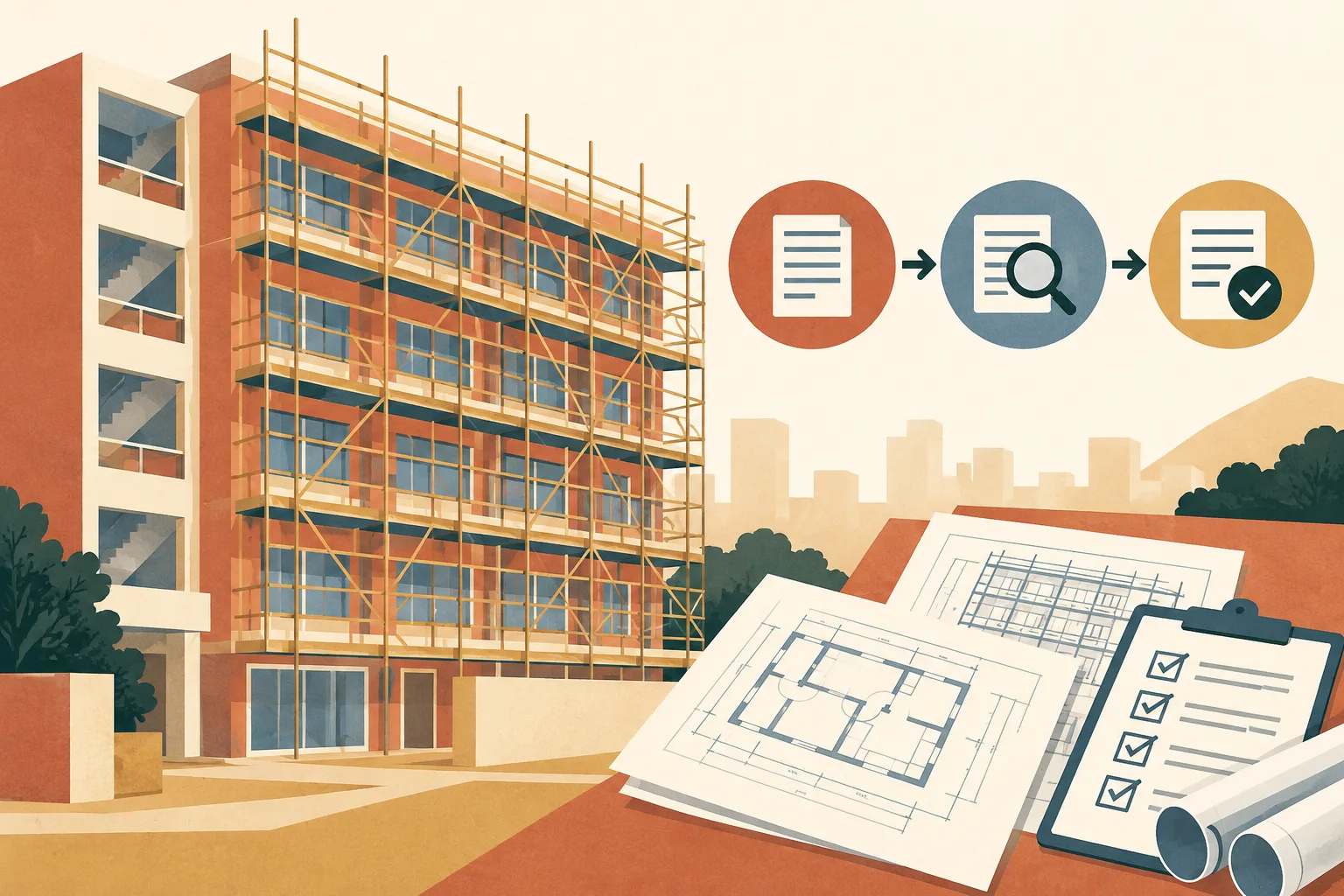
Major building repairs would be moved out of the minor-works category and require approval before covered work begins under government proposals to amend the Buildings Ordinance. The Development Bureau’s permanent secretary said the change is needed because residents may remain in their homes while repairs are under way. The bureau has submitted the proposals to the Legislative Council’s Panel on Development.
The rules would cover qualifying major repairs in buildings of four storeys or more, including scaffolding that spans at least four storeys across the full width of a facade. Before work starts, plans and a supervision plan would have to be submitted to the Buildings Department. These would set out whether the work would be staged, how escape routes would stay clear and how temporary protections, including scaffolding and netting, would meet required standards. The department would consult the Fire Services Department before approving the work.
Approval is expected to take longer than it does under the current arrangements. The permanent secretary said the bureau hopes the Buildings Department can complete its decision within 45 days of receiving all the required documents. For work that departs from approved plans, the proposed maximum fine would rise from HK$500,000 to HK$1 million, while the maximum prison term would double from 1.5 years to three years.
A proposed Building Maintenance Support and Services Council would provide a more extensive repair service than the existing Tender Better scheme. The government plans to divide the territory into 15 areas and appoint one regular-contract inspection consultancy in each. Those firms would inspect buildings in their areas and take part in the council’s projects. The proposals would also prevent the same person or company from inspecting and supervising one project, and introduce declarations of interests and proactive spot checks to address bid-rigging risks.
The expanded service would cost more, although final fees would depend on the details eventually offered. The Development Bureau acknowledges that tighter oversight could also raise repair costs, and says it wants to encourage competition, including by being more flexible about past-project experience when drawing up pre-approved lists of professionals and contractors. Its proposed subsidy approach would use rateable values: owners in the lower-value 80 per cent would receive support, while those in the higher-value 20 per cent would generally pay for the service themselves. HK$313 million has been allocated for fee-waiver subsidies for owners using the new services.
The wider package would also change how unauthorised building works are treated. As of September last year, 68,800 overdue demolition orders were recorded, about 64,000 of them involving unauthorised works. The Development Bureau proposes that small cases with limited dimensions and little height above ground could be classed as exempt works if assessed as safe. Larger or higher cases could be checked for safety by professionals or contractors under an inspection scheme.
Specified serious cases would face tougher enforcement, including rooftop enclosures larger than 30 square metres, unauthorised basements or swimming pools over 1.5 metres high, openings made through load-bearing walls, and the removal or alteration of escape routes or fire-safety installations. The proposals would introduce fixed penalties for failing to comply with a demolition order, with prosecution and increased penalties possible afterwards.