


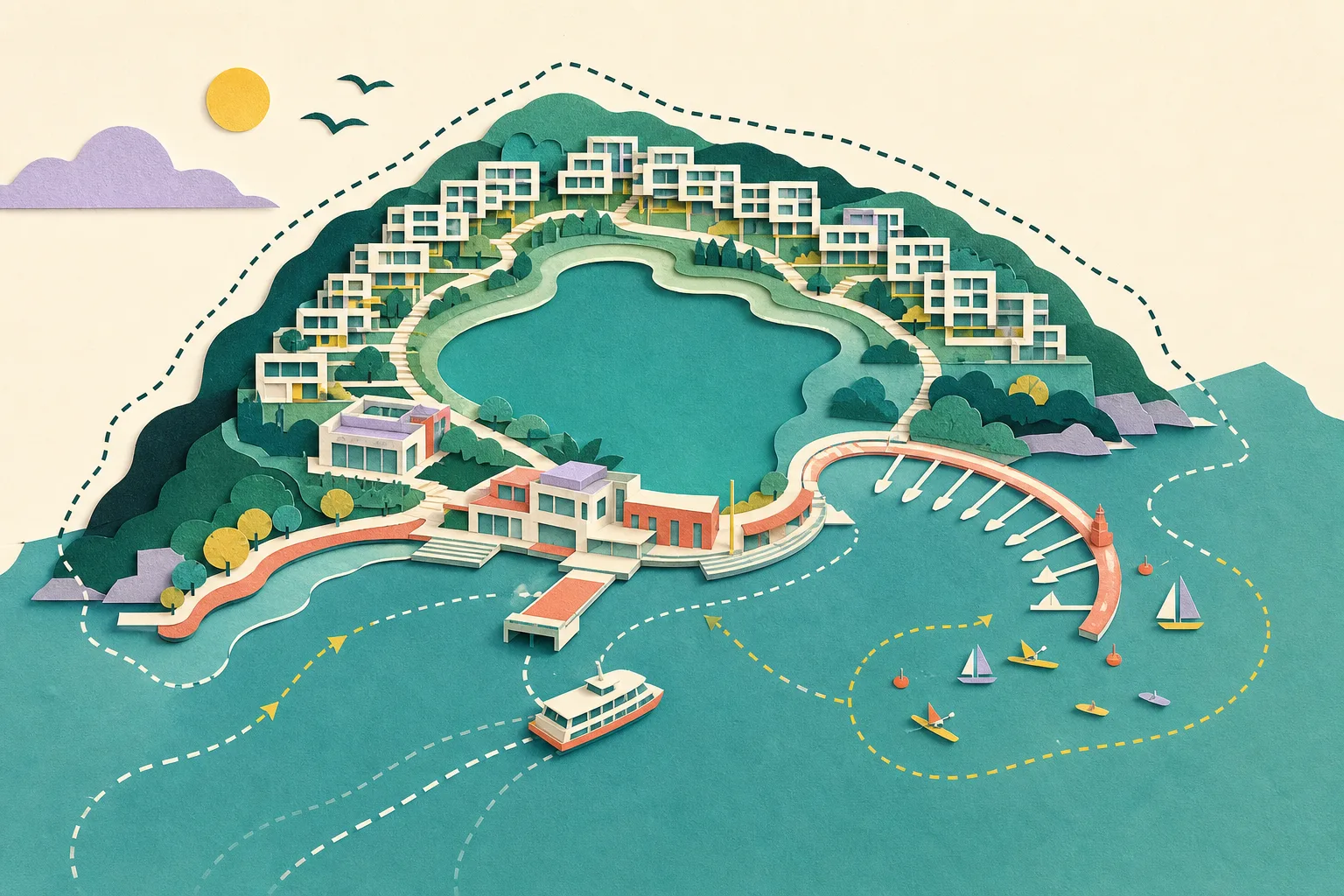
The Development Bureau has submitted a revised plan to turn the former Lamma Island quarry into a mixed tourism, recreation and residential destination. The proposal, submitted to the Islands District Council on 26 August 2026, includes low-density housing, water sports, yacht berths and visitor facilities at the site on the northern shore of Sok Kwu Wan.
The revised plan provides 1,200 residential units, up from 1,100 in the previous proposal, with an estimated population of 3,400. The tourism and recreation component would have a total gross floor area of 47,400 square metres, a 13 per cent increase over the original plan.
The former quarry covers about 25 hectares and includes a five-hectare artificial lake. The proposed marine facilities include about 150 to 200 yacht berths, along with activities such as canoeing, paddleboarding and sailing.
The plan also proposes hotels or resort villas, restaurants, retail outlets and other commercial or basic-needs services near a planned public ferry pier. The Development Bureau said the low-density housing design was intended to preserve Lamma’s rural character, while population planning took account of infrastructure capacity, the surrounding environment, living-space quality and public expectations.
Lawmaker Steven Ho welcomed the proposal, saying it was consistent with efforts to promote island tourism and Hong Kong’s marine economy. He also called for improvements to major public piers to strengthen transport links.
The proposed yacht facilities have drawn differing assessments. Surveyor Ng Pak-kin said the location could be attractive because Lamma is in a traditional yacht area, and that a policy encouraging mainland yachts to travel south could help draw users. Hong Kong Yacht Association president Ho Wai-lok questioned whether yacht owners would choose the site, citing the nearby Deep Water Bay Yacht Club and the presence of many cargo vessels in the waters.
The proposal remains under consideration. It is not yet clear whether it will be approved, when construction or opening could begin, or what environmental, marine-traffic and community-impact assessments will be required. The level of demand for the proposed berths and the infrastructure needed to support the planned population and visitors are also unresolved.