


MTR plans to move two large prefabricated structures into position on the operating Tuen Ma Line viaduct for Hung Shui Kiu Station, with each of the two operations expected to disrupt services for no more than two days. The station is being built between Tin Shui Wai and Siu Hong and has been described in reports as Hong Kong’s first station to be added to an operating railway viaduct.
MTR said the entire Tuen Ma Line is not expected to be suspended, but services at Tuen Mun, Siu Hong and Tin Shui Wai stations are expected to be affected. Discussions with the government on replacement arrangements, potentially involving Light Rail and buses, were continuing and no final plan had been announced in the supplied reports.
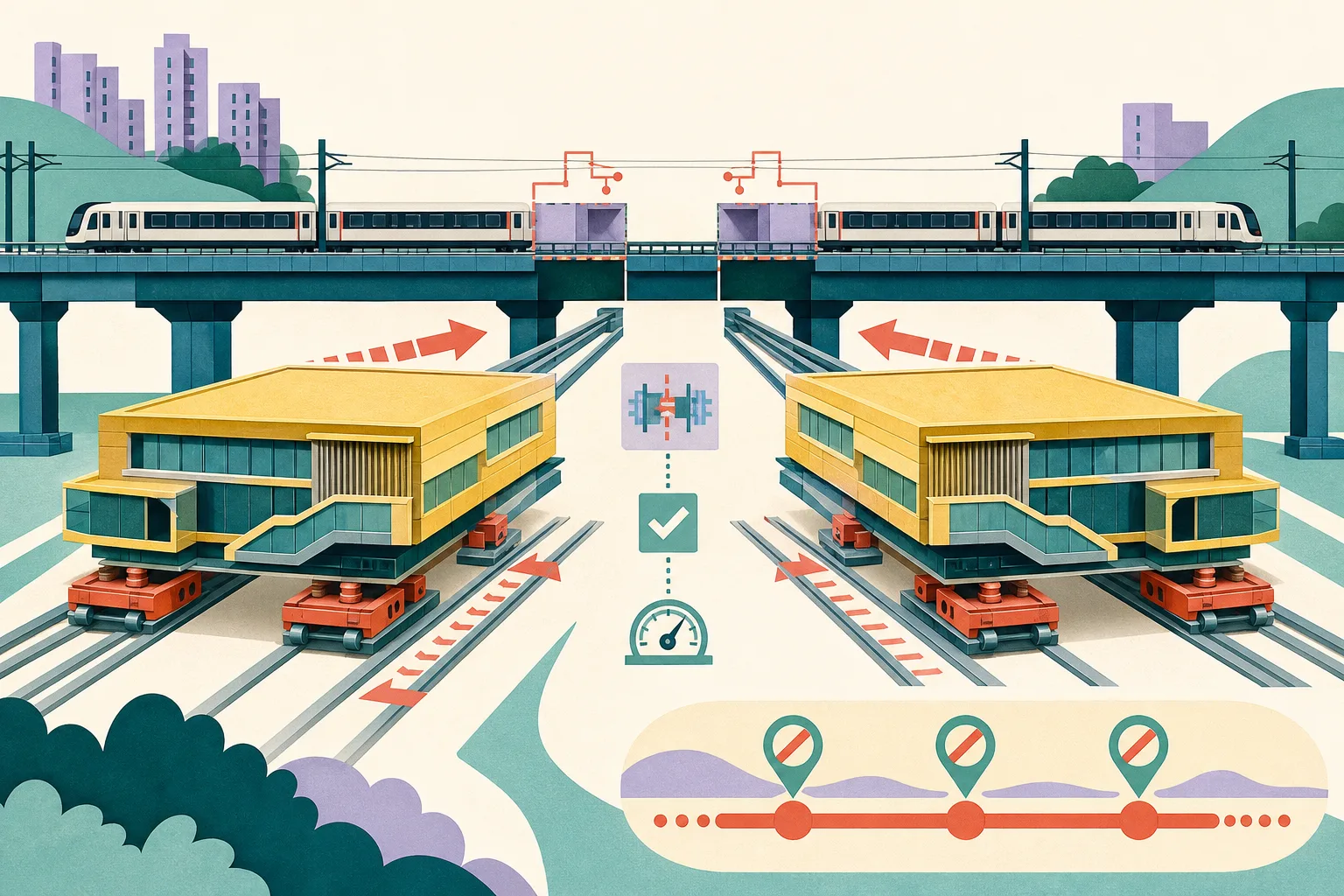
The approach is known as “skidding construction” or “pre-build then shift”. The two separate station structures will each be about 210 metres long, 15 metres wide and 10,000 tonnes. They are being assembled roughly 30 metres from the viaduct before being moved into their final positions using a track system and large hydraulic systems.
The first major movement is planned for late in the first quarter of 2027, followed by the second in the third quarter. One report said the first structure would be moved towards Wu Kai Sha and the second towards Tuen Mun.
MTR said building the structures away from the existing tracks should allow most work to take place during normal service hours. This would reduce reliance on the overnight railway work window and limit interaction with the active line to the final movement and connection stages.
The final roughly two metres of each move will be a critical connection stage involving railway works, including the installation of overhead cables and modifications to related facilities. MTR said trials would be carried out before the operations, followed by testing and other work after installation, and that the method was intended to reduce risks from construction directly on an active viaduct.
The station is targeted for completion or opening in 2030. MTR said the method is included in the project budget and is expected to save working time, but it has not quantified any time or cost savings. It plans to assess the remaining work after the two shifting operations.