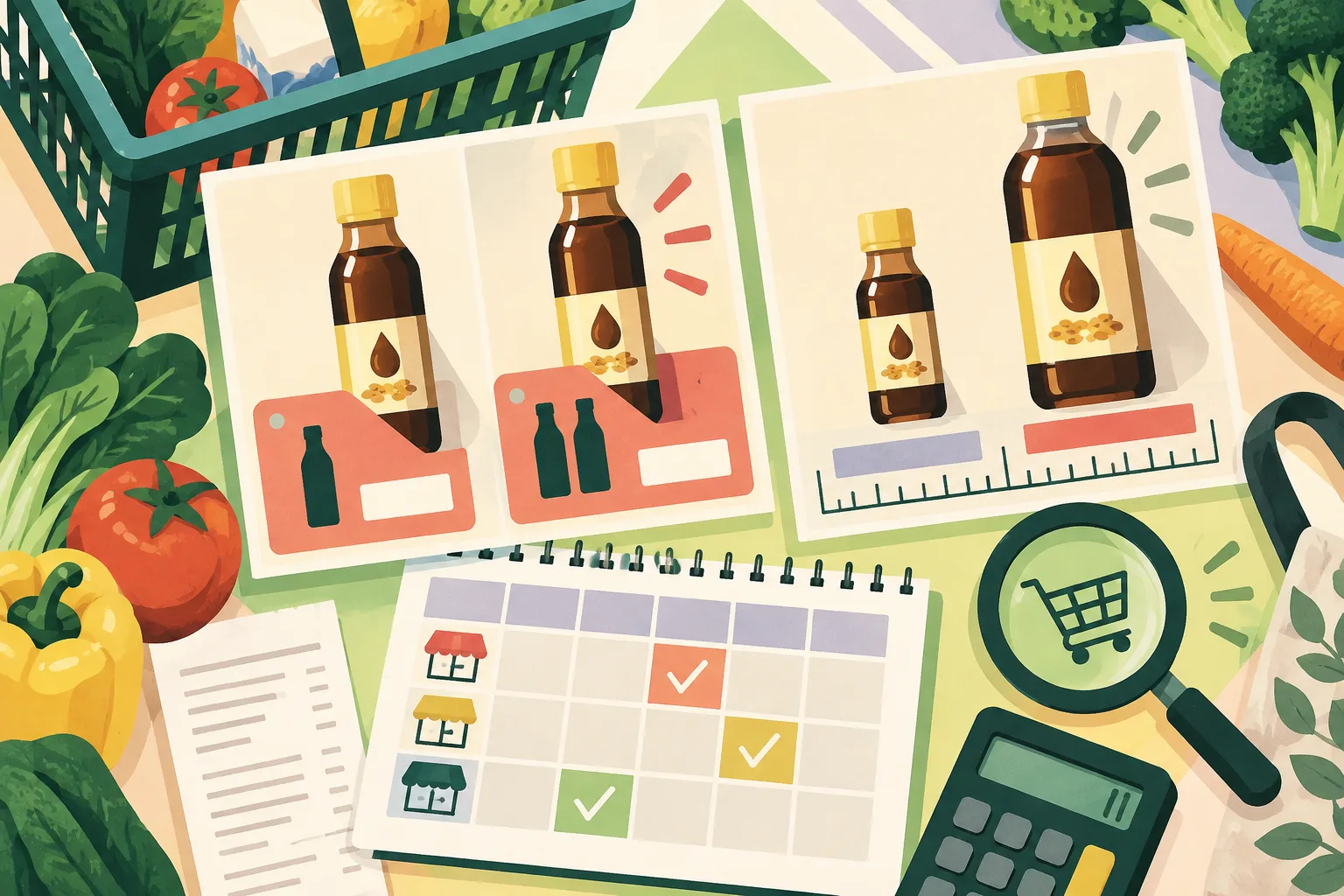
A “buy one, get one free” label can promise something close to a half-price deal while delivering little or no saving against the product’s usual price, according to a Consumer Council survey of 222 products sold online by three major supermarket chains.
The council compared promotional prices with single-item prices recorded outside promotion periods. In one example, a 150-millilitre sesame-oil product cost HK$10 to HK$14 before a promotion. During the “buy one, get one free” offer, its displayed single-item price rose to HK$20 or HK$22. That brought the effective price to HK$10 or HK$11 per item, making the saving against the earlier price no more than about 29%.
The pattern was also found in other products. A 410-millilitre steamed-fish soy-sauce product produced an effective discount of about 16%, while a 280-gram rice-noodle product produced a discount ranging from 0% to 29%, when the promotion-adjusted price was compared with prices outside the promotional period.
Pack size also mattered. In seven of 15 groups of same-brand, same-category products with different sizes, the larger pack was at times 2% to 35% more expensive per unit. The comparison used price per 100 grams or 100 millilitres, rather than the amount paid at the till.
For one bottled soft drink sold in 2-litre and 1.25-litre sizes on the same day, the larger pack cost HK$0.75 to HK$1 per 100 millilitres. The smaller pack cost HK$0.68 to HK$0.95 per 100 millilitres, leaving the 2-litre pack between 2% and 32% dearer by volume.
There was no single bargain day across the chains. About 39% of the AEON products covered reached their lowest weekly average price on Wednesday before multi-buy offers were included, while more reached their low point on Friday or Saturday when those offers were counted. At one of the other chains, about half the products were cheapest on Saturday or Sunday after promotions were included; the third chain’s low-price products were spread more evenly through the week.
A Consumer Council research and testing subcommittee member advised shoppers to compare the ordinary single-item price with the promotion-adjusted price per item, rather than relying on the offer’s format. The council’s price-tracking app and website can be used to follow usual prices, and it recommended that supermarkets put unit prices on their labels so those comparisons are easier to make.