


The Legislative Council Finance Committee approved a HK$10 billion grant from the Capital Investment Fund for San Tin Technopole Company Limited on November 6. The secretary for innovation, technology and industry said the government wants its investment to draw in as much private funding as possible, rather than use the full allocation at once, and help the company become financially self-sufficient.
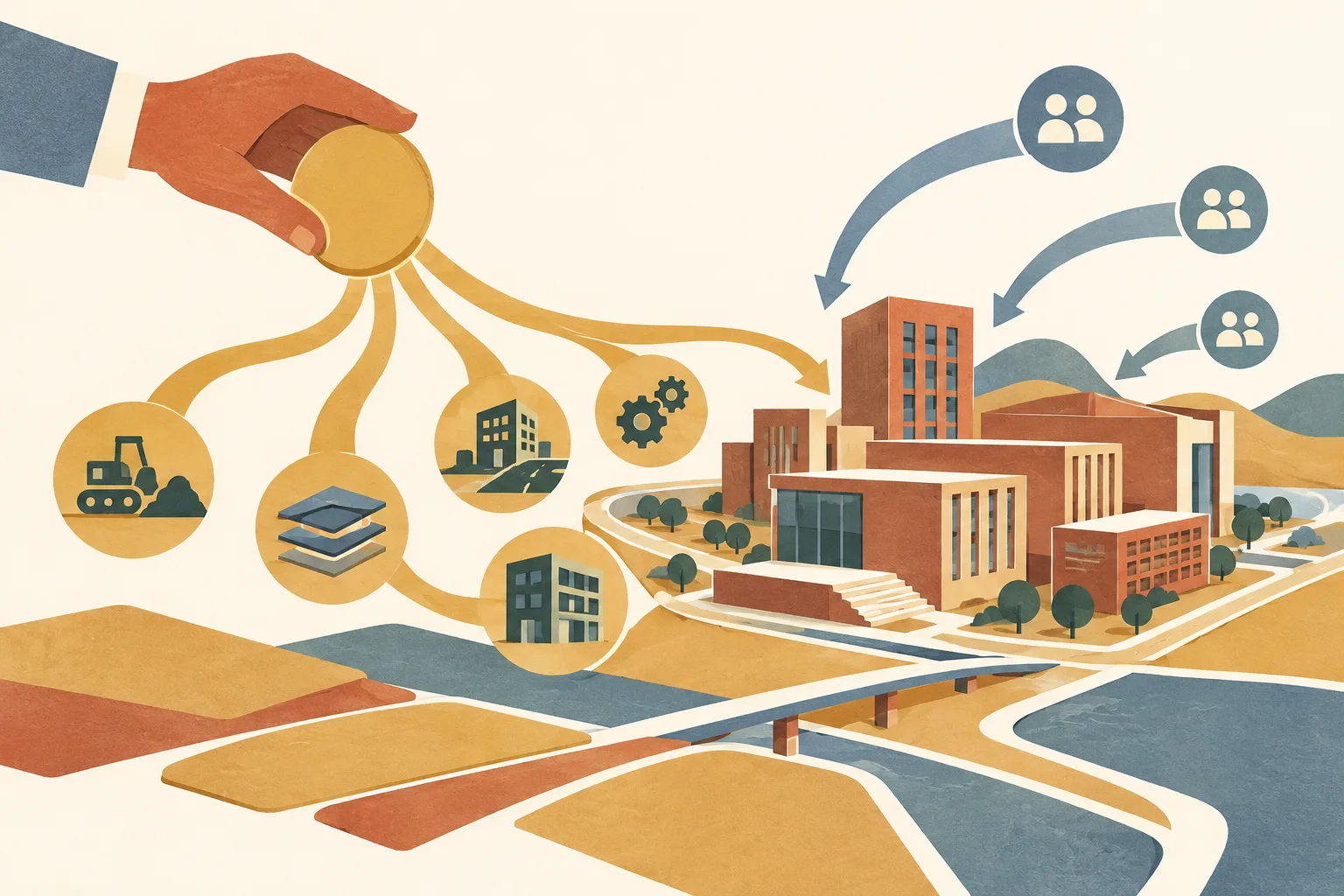
The funding is divided into HK$3 billion to speed up the provision of serviced land for companies, HK$1 billion for operating costs over the coming seven years, and HK$6 billion to build a headquarters on 20 hectares. The headquarters allocation includes HK$1 billion for related infrastructure.
An Innovation, Technology and Industry Bureau deputy secretary-general said the operating-cost estimate drew on preliminary consultant estimates and experience at other parks, including the Hetao area, and should cover at least seven years. Costs are expected to be higher in the first three years as operations expand. Some professional-service, legal and administrative costs are forecast to ease as the operation matures, before operating costs rise again from around the fifth or sixth year.
Finance Committee documents project that the company will enter a business-expansion phase in 2031–2033 without yet being profitable, and will still need funding. The bureau’s chief assistant secretary-general said the figures were estimates, with more money expected to go into infrastructure in the early stages and government funding to fall as the company’s business becomes established.
Government projections put the technopole’s contribution at about HK$200 billion or more a year to Hong Kong’s GDP once it is fully operating, with about 200,000 related full-time jobs. A bureau deputy secretary-general said the estimates take account of factors including floor area, population density and industry output, and will be reassessed as the technopole develops.
The company chairman said no decision had been made on whether to use a build-operate-transfer model, in which a developer builds and runs facilities before handing them over, or a build-own-operate model, in which it retains and runs them. He said the company was listening to customers’ differing requirements.