


Hong Kong’s building fire-safety training programme had recruited about 41,000 people since it began in March, against a target of 45,000 for 2026. The Hong Kong Fire Services Department told HK01 it aims to train 50,000 people in 2027.
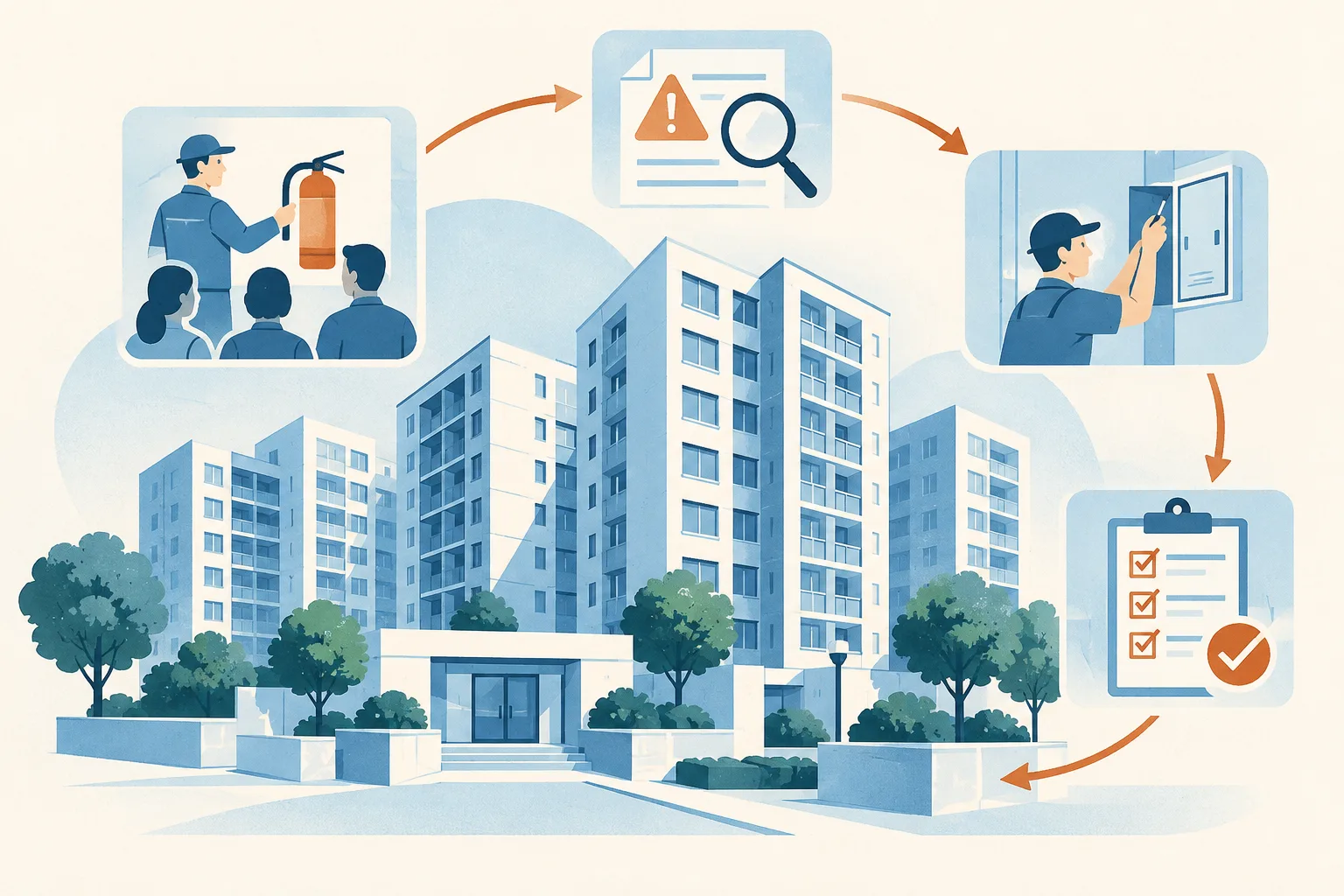
The course is for property-management practitioners, security staff, hotel and construction workers, owners’ corporation representatives and residents. It covers fire equipment and smoke hoods, emergency response, CPR and AED procedures. Trainees also learn to identify and report fire hazards, and to monitor repairs to fire-service installations.
More than 80 per cent of active licensed property-management practitioners had completed the training, the department said. Its July Building Emergency Preparedness Charter asks signatory companies to meet fire-prevention and emergency-preparedness indicators and arrange training for frontline staff.
About three months after the charter was launched, every property-management company that had sent staff for training had signed it, according to the department. Those companies cover about 6,000 residential buildings and 23,000 employees—roughly one-fifth of the 28,000 residential buildings in Hong Kong with property managers.
The department is working with the Property Management Services Authority to train property-management staff on their fire-safety responsibilities and inspection work. The two bodies have also issued a practical booklet on recording, handling and following up hazards, running fire drills, monitoring fire systems and managing risks during fire-service works.
The department is pursuing amendments to the Fire Services Ordinance and related legislation that would make property-management companies legally responsible for building fire safety alongside owners. It also planned to issue a charter for registered fire-service contractors in mid-October as an interim administrative measure ahead of amendments to the ordinance.
The planned charter has eight sections on risks in fire-service work and maintenance, including inspections, repairs, certificates, fire-system shutdowns and coordination between sectors.