


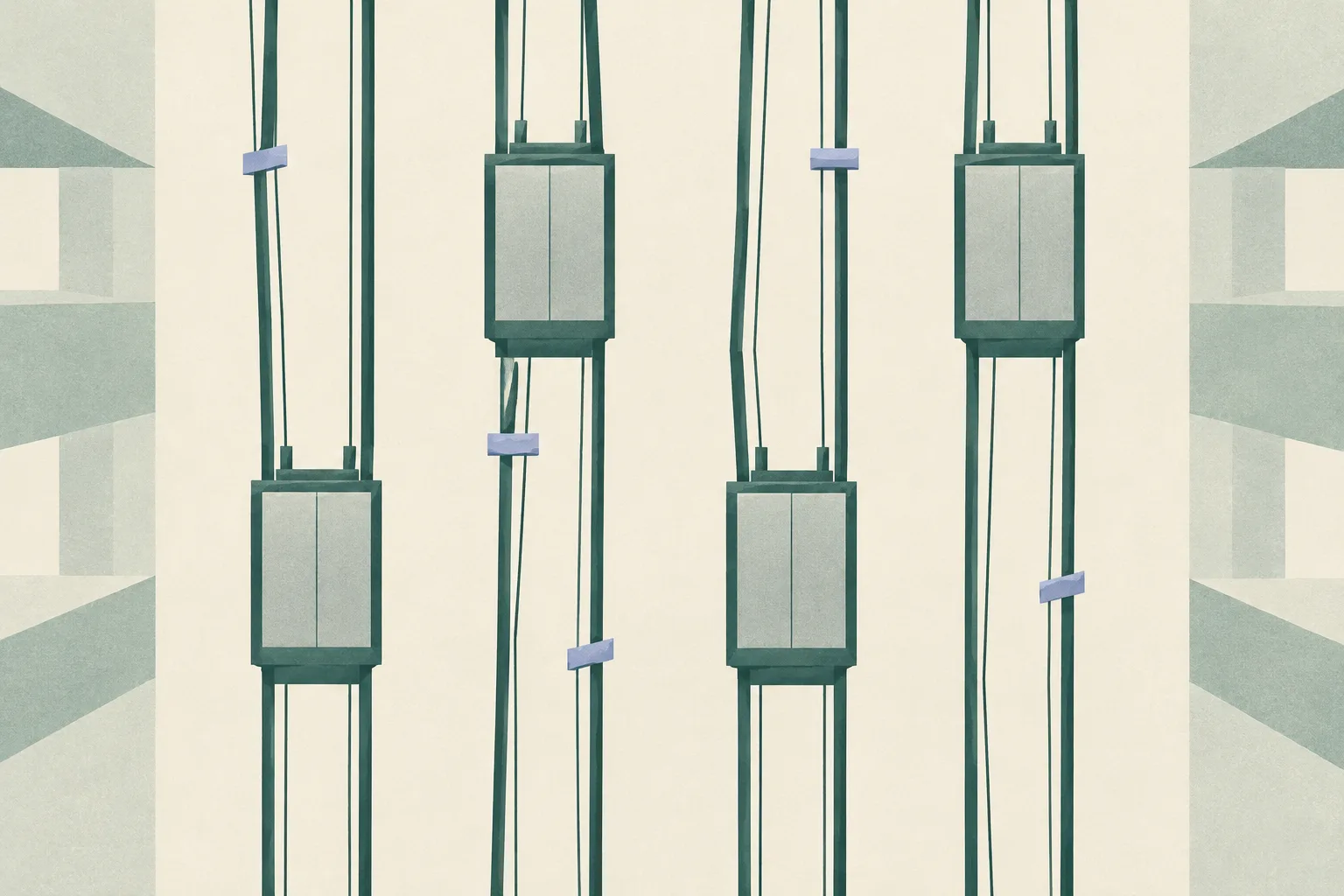
All 28 lifts in Queen Mary Hospital’s Clinical Block 1 had faults of varying severity, a Development Bureau investigation submitted to the Legislative Council found. The faults affected the lifts’ operation and have held back the new block’s full use.
The bureau identified four main causes: lift-shaft walls that deviated from the required dimensions and vertical alignment; guide rails that were not vertically aligned from floor to floor; lift cars with unbalanced centres of gravity; and poor installation workmanship. Four shafts had particularly serious deviations, of about 62 to 82 millimetres. The report said insufficient clearance between a lift car and the shaft wall could trigger safety devices and stop the lift.
The report recorded 238 lift faults from September 2025 to January 2026. One hundred involved lift components, and six were incidents that had to be reported to the Electrical and Mechanical Services Department.
The bureau traced warning signs to 2024, when Architectural Services Department staff found unauthorised concrete chipping in some shafts during inspections and asked the contractor to repair it. In February 2025, the Electrical and Mechanical Services Department found damage affecting the installation of a guide-rail bracket while assessing one lift’s operating-permit application. A subsequent review found chipping in all 28 shafts.
The bureau said main contractor ATAL Engineering Group was responsible for inaccurate shaft construction and followed up carelessly after learning of dimension and alignment problems. It also said the contractor chipped shaft concrete without authorisation or submitting a repair proposal. The lift-installation subcontractor was criticised for failing to install guide rails and lift cars to the required specifications; an engineer it employed had not carried out a thorough inspection before issuing a safety certificate.
The investigation also found shortcomings in government oversight. It said an authorised person appointed by the architectural design consultant relied on contractor-supplied photographs, rather than checking the shafts’ actual condition, before issuing a building-works report. Architectural Services Department staff were criticised for their handling of the project, including issuing a completion certificate while five lifts still lacked operating permits. The bureau said disciplinary proceedings were being discussed.
The bureau said the Electrical and Mechanical Services Department followed the required procedures for lift permits, but some staff did not investigate or follow up irregularities thoroughly. The bureau said possible illegal conduct had been referred to law-enforcement authorities for investigation. It would begin internal procedures to take further disciplinary action against the companies involved; possible sanctions include suspension of tendering rights, downgrading or delisting.
As of 10 November, repairs had been completed on 18 lifts, but only seven had passed inspection and opened to staff and the public. The bureau expected the remaining repairs to finish in the fourth quarter of 2026; all 28 lifts must be operating normally before clinical services can fully begin in the block.