


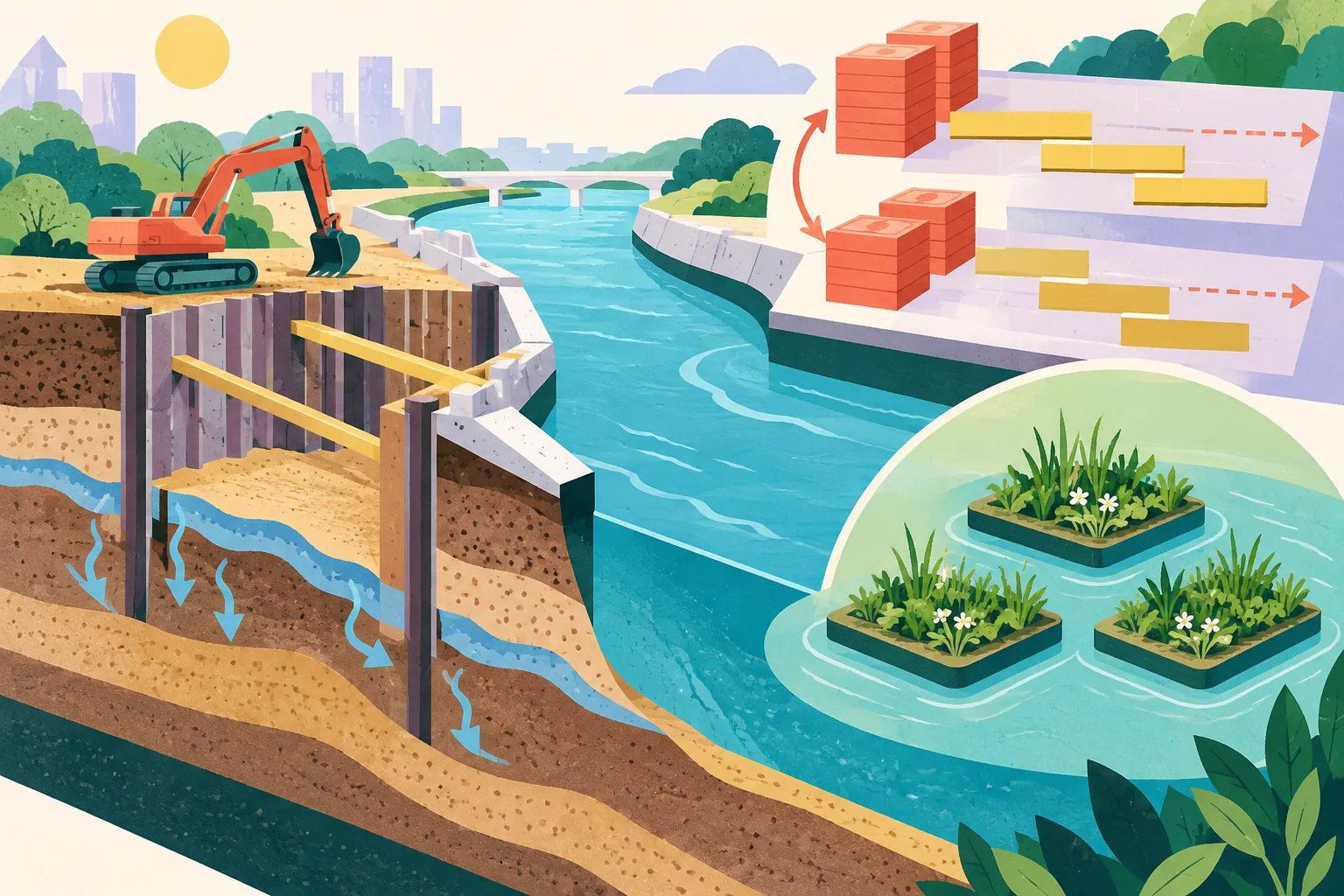
An Audit Commission report published on 25 November 2026 found shortcomings in site investigation and construction supervision on the Tsui Ping River and Kai Tak River projects. The findings included extra costs, delayed works and the removal of three ecological rafts after they tilted and shifted.
For one Tsui Ping River contract, the Drainage Services Department said actual expenditure was HK$1.118 billion against a final target price of HK$931.2 million — an overrun of HK$186.8 million. Under the cost-sharing arrangement, the government bore HK$46.6 million and the contractor HK$140.2 million.
Five compensation events, totalling HK$79.2 million, were linked to unexpected ground conditions. At one work site, soil permeability was far higher than the tender survey indicated; an old drainage-channel plan also lacked information about its bedding. Groundwater entered excavations and piling caused land settlement. Compensation included HK$36.2 million for water inflow from the riverbed and HK$43 million for settlement and reinforcement.
The works were substantially completed on 30 September 2024, about 10 months later than planned. Three ecological rafts cost HK$2.7 million to install and optimise. After hard solid waste and turbid water were found upstream, the rafts tilted. Two were out of position in April 2026 after their anchor cables broke; all three were removed the following month, about 1.4 years after installation.
The Audit Commission said flooding during construction prompted a higher flood-protection standard on the Kai Tak River project, adding HK$47.4 million in works costs. Thirteen works orders were extended by between 50 and 447 days, generating HK$69 million in extension-related costs. The trunk sewer alignment and sheet piles were incompatible with some underground public utilities, requiring a change in construction method that cost HK$3.4 million. A delayed handover by one contractor held up another’s start by 11 months and led to an additional HK$11.9 million payment.
The Audit Commission recommended determining underground site conditions so work could proceed where practicable, and continuously reviewing project cost estimates to improve budget accuracy.