


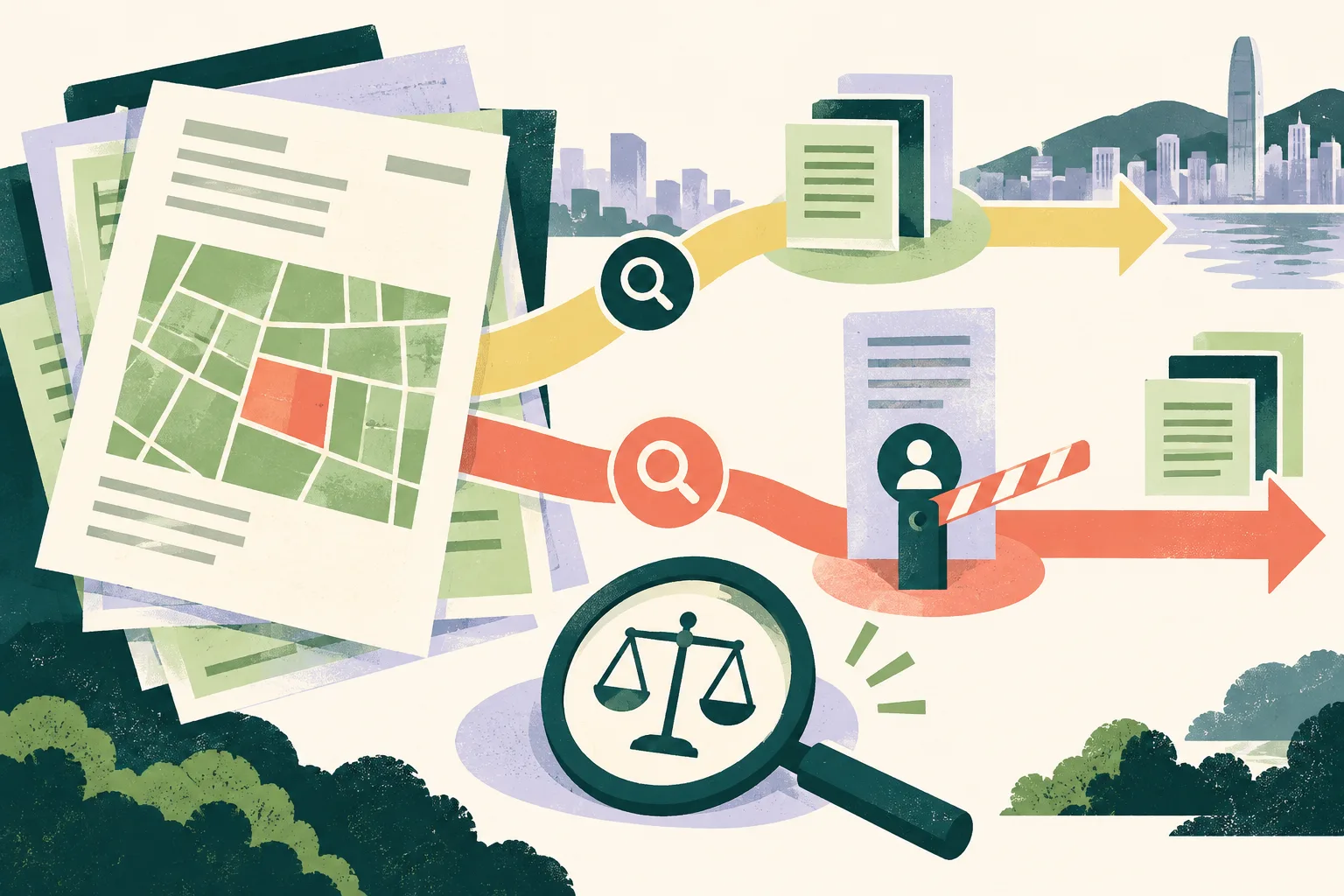
Journalists would have to apply individually to the head of the Land Registry for permission to search land records, citing public-interest grounds. Reporting is not expressly included among the nine specified purposes for searches. The measures were gazetted as subsidiary legislation on 16 October and were due for Legislative Council scrutiny on 21 October under a procedure in which rules are made before lawmakers review them.
The rules distinguish between those individual applications and searches for specified purposes, including property transactions and research or analysis of the property market. The final wording removed an earlier reference to reporting. At present, journalists and other members of the public can search online and obtain records within minutes, HK01 reported.
The Hong Kong Journalists Association says property and finance reporters use land searches to check basic details such as transaction amounts, dates and areas. It also says investigative reporters rely on open searches to look for unusual transactions. HK01 has reported that it and other media outlets have used land records to cross-check property transaction records and information about related parties.
One recent example was HK01’s July 2026 investigation into proxy votes collected by a district councillor’s team from residents who had died. The outlet said it used land searches to check at least three of the votes.
The association argues the restrictions could reduce property-market transparency and weaken public scrutiny of land interests. It says the Development Bureau’s explanation — that the changes balance privacy protection with the Land Registry’s role — did not address the public’s right to know, and that the government had provided no data showing how the previous system intruded on privacy.
In a submission to the Legislative Council, the association also cited 17 media applications for vehicle-record information in recent years: it said only one was partially approved, after a lengthy delay. It predicts that public-interest land searches could face similar obstruction. The Land Registry planned to implement the new registration system in the first half of 2027.