


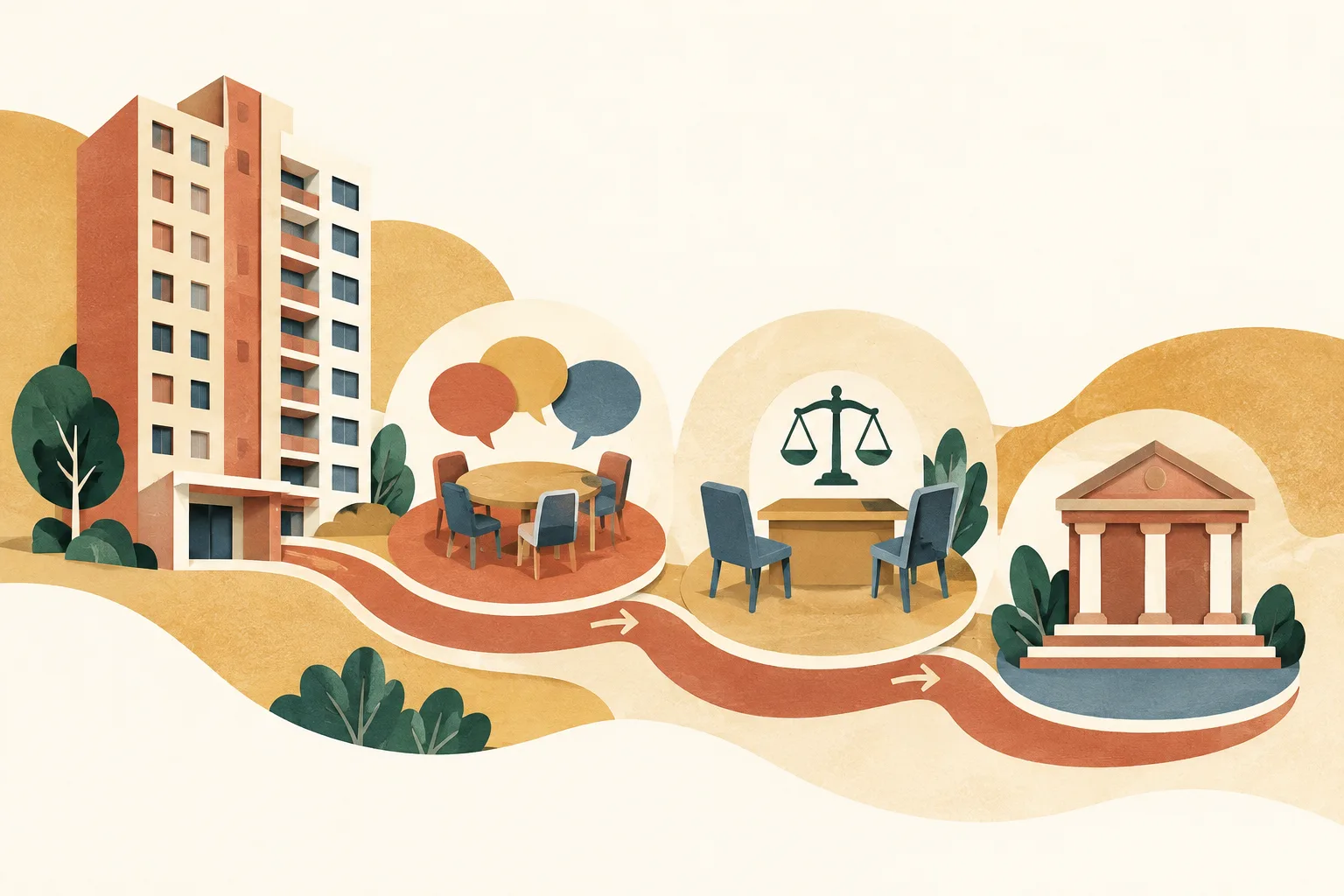
The government plans to introduce a three-stage route for building-management disputes in 2027, with district councillors stepping in at the outset to help prevent disagreements from escalating. Alice Mak, Secretary for Home and Youth Affairs, said the aim was to address problems early, before they consume time and money in court.
At the first stage, councillors would help residents, owners’ corporations and management companies discuss the issue. Mak pointed to disputes over an estate’s gate-closing time as the sort of practical question they could help resolve, by bringing the parties together to talk.
Cases that could not be resolved locally would move to existing professional mediation services. If mediation failed, they could proceed through legal channels, including the Lands Tribunal.
Councillors would receive mediation training and could help residents with referrals and later legal procedures, including filling in forms. Mak said further assistance, including legal advice, could be provided where needed. District councils already have building-management working groups through which councillors contact owners’ corporations and support residents according to local needs; district office staff also take part.
Mak said disputes can end up in court after neighbours become entrenched, without improving building management. She warned that when owners are divided and unable to deal with problems rationally, unscrupulous traders may find an opportunity to take advantage.
The government also plans to amend the Building Management Ordinance. Mak cited a grey area in which there is no clear rule against an owners’ corporation cancelling a meeting without reasonable grounds. For major-repair votes, the proposed changes would encourage owners to attend in person and require owners’ corporations and management companies to arrange briefings beforehand. They would also introduce measures concerning proxy-vote authenticity and declarations of interest.