


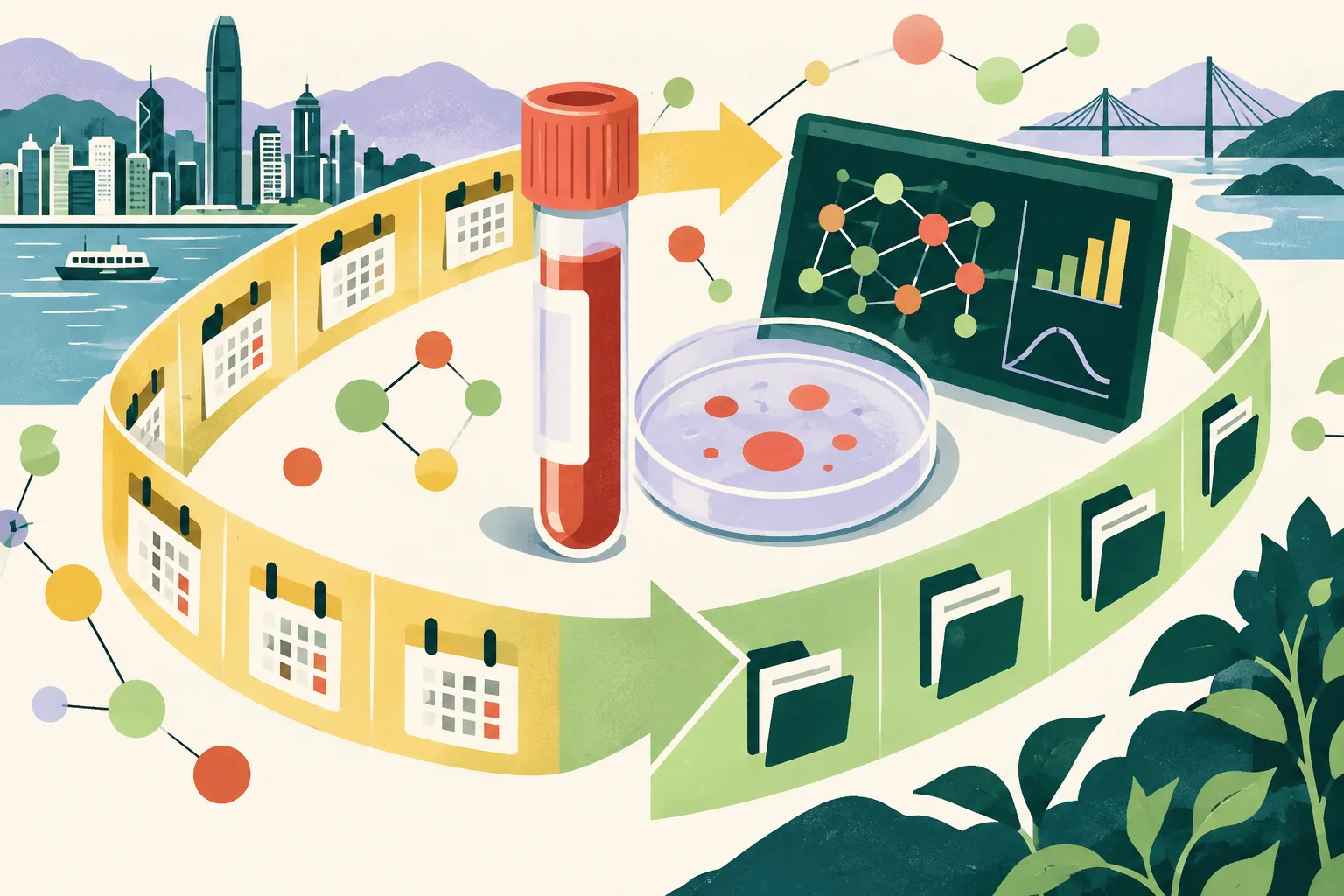
The HKU Institute for Precision Prevention is recruiting 15,000 Hong Kong residents aged 40 to 70 for the Protecting.Health Hong Kong Study, a project designed to follow participants over 20 years. HK01 reported on 25 November that the study had formally entered its clinical phase.
The first ten years will involve active follow-up, with regular clinical assessments and repeated blood samples at partner clinical sites. The following decade is planned for collecting and linking participants’ health data, extending the period researchers can track their health.
The study aims to identify molecular features linked to disease risk before symptoms appear, and to support earlier, more personalised prevention of major non-communicable diseases. Its stated focus includes cardiovascular disease, cancer, diabetes and chronic respiratory disease.
HK01 described the proposed method as using infrared light to read molecular patterns in blood. Researchers plan to establish a molecular baseline for each participant and use molecular analysis and artificial intelligence to track changes over time. The study aims to find out whether this approach can identify early disease-risk signals, with the eventual goal of developing an affordable personalised screening algorithm.