


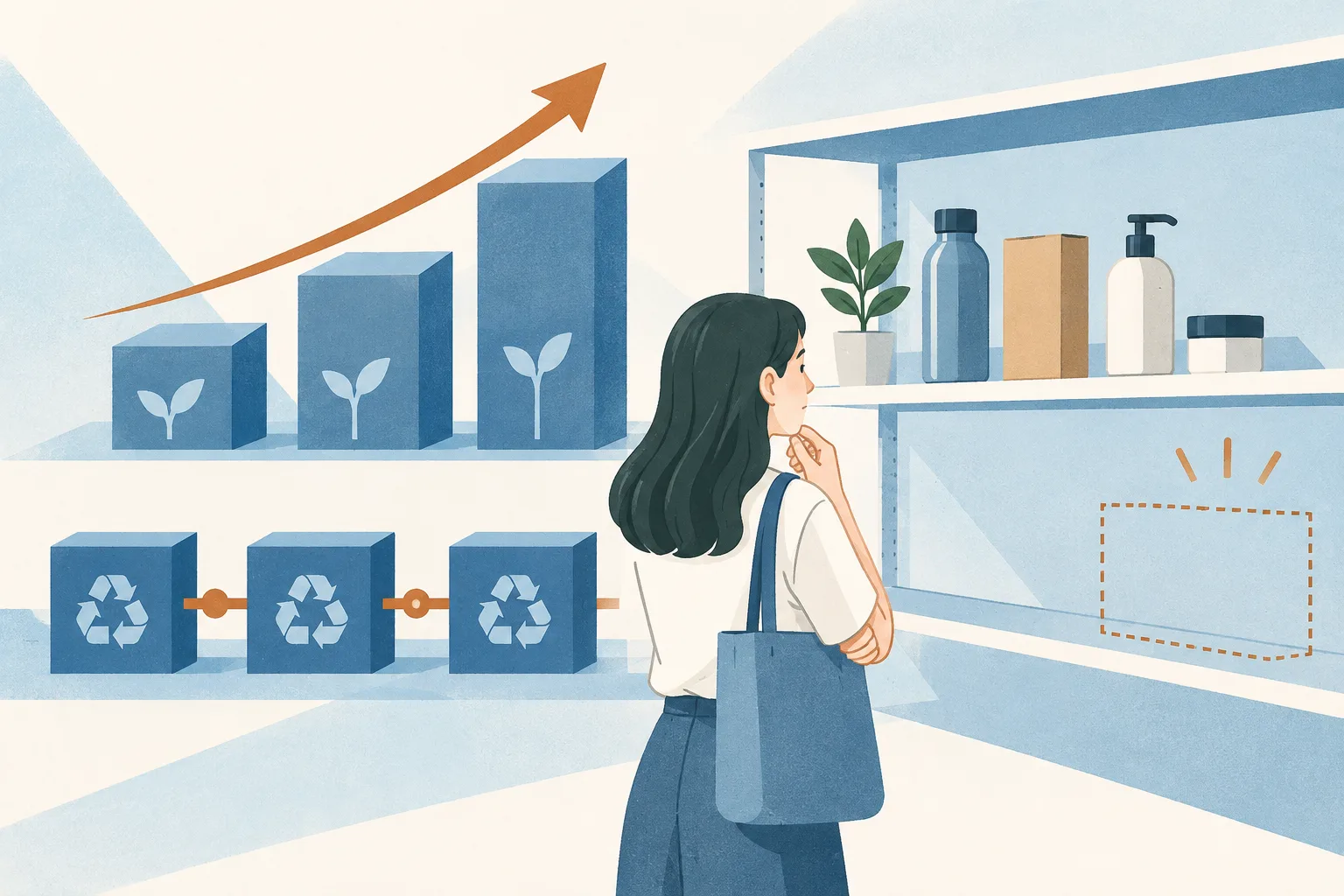
Nearly all respondents in the Consumer Council’s latest sustainable-consumption study said they would pay more for sustainable products. Yet only 24% thought enough were available on the market, highlighting a gap between consumers’ willingness to buy and what they believe shops offer.
The Council’s third tracking report found that its awareness-and-attitude index rose from 74 in 2015 to 79 in the latest round, while its behaviour-and-intention index went from 67 to 72. Both are scored out of 100. But the recycling-behaviour sub-index remained at 63 in all three rounds. The study said gains in plastic and metal recycling were offset by falls in glass and paper recycling, and low rates in newer areas such as food-waste recycling.
Price and information were among the obstacles to buying sustainable products: 58% of purchasers identified higher prices and 47% insufficient information. On recycling, only 46% of respondents said they had confidence in Hong Kong’s system. Many were unsure what happened to collected materials, while limited space at home, hygiene concerns and inconvenience also deterred them.
The report also found differences between groups. Young people aged 15 to 24 and students were among the groups that took relatively little action; the Council said household waste was often handled by domestic helpers or older relatives, reducing their motivation to recycle. Its chief executive recommended multilingual education for domestic helpers and others who assist with household work.
Hong Kong’s online retail sales grew 74% between 2020 and 2025, and the share of residents who shopped online had more than doubled over the previous decade. The Council linked the wider use of takeaway, online shopping and home delivery with more disposable items and packaging waste.
The Council’s vice-chairman, Tony Pang Chor-fu, pointed to one source of confusion: some coated papers, including glossy promotional leaflets, cannot go directly into paper recycling because they may contaminate the recycling stream.