


Hong Kong’s electricity market will need to change when the government’s agreements with the two power companies expire in 2033, Secretary for Environment and Ecology Tse Chin-wan says. The government will conduct a comprehensive review of the market’s future, with the aim of improving supply stability and price competitiveness.
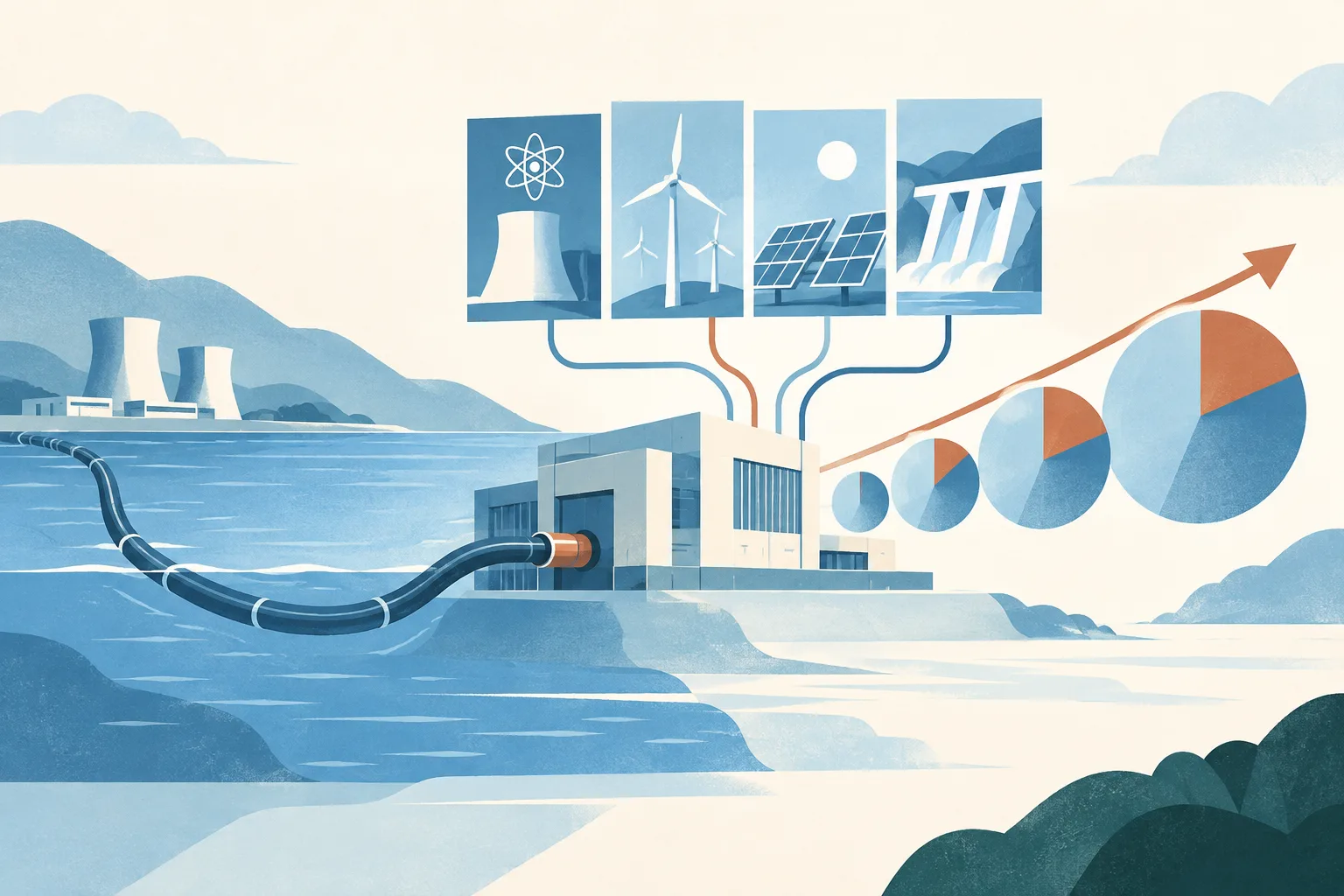
Zero-carbon energy makes up about 25% of Hong Kong’s energy mix, and the government aims to raise that share to 30% by 2030 and 60–70% by 2035, Tse said. He argued that greater use of nuclear, wind, solar and hydro power could make supply more stable and help steady energy prices, which can fluctuate sharply during international energy crises.
The existing link is the Daya Bay cable. The government had asked the power companies to increase its transmission capacity, and Tse said the enhancement was completed this year.
A further step is a large receiving station on reclaimed land at Tseung Kwan O Area 132, connected to a new transmission cable from the mainland. The government plans to use it to bring in more zero-carbon electricity. A working group involving the government, the two power companies and mainland enterprises is discussing the engineering design, financing, funding contributions and each party’s role in the project.
Tse said the expanded use of mainland zero-carbon electricity could lower Hong Kong’s electricity bills in the long term.